📍 Project: Organic Farming in Sikkim, India
📆 Duration: 2 years (2021–2023)
👩🏽🔬 Role: Lead UX Researcher & Ethnographer (solo)
🧪 Methods: Ethnography · Co-Design · Systems Mapping
👥 Users: 250+ farmers, women-led SHGs, youth, and local officials
🎒 Approach: Lived alongside farming families seasonally, mapped trust breakdowns, and co-created tools rooted in ritual calendars.
📦 Key Deliverables: Personas · Ritual-Aligned Crop Calendars · Offline Dashboards · Local Escalation Systems · Trust-Based Toolkits
📈 Measured Impact:
🔎 +60% increase in scheme clarity
💰 3× boost in crop value through QR storytelling
🧊 75% spoilage reduction with seasonal cold hubs
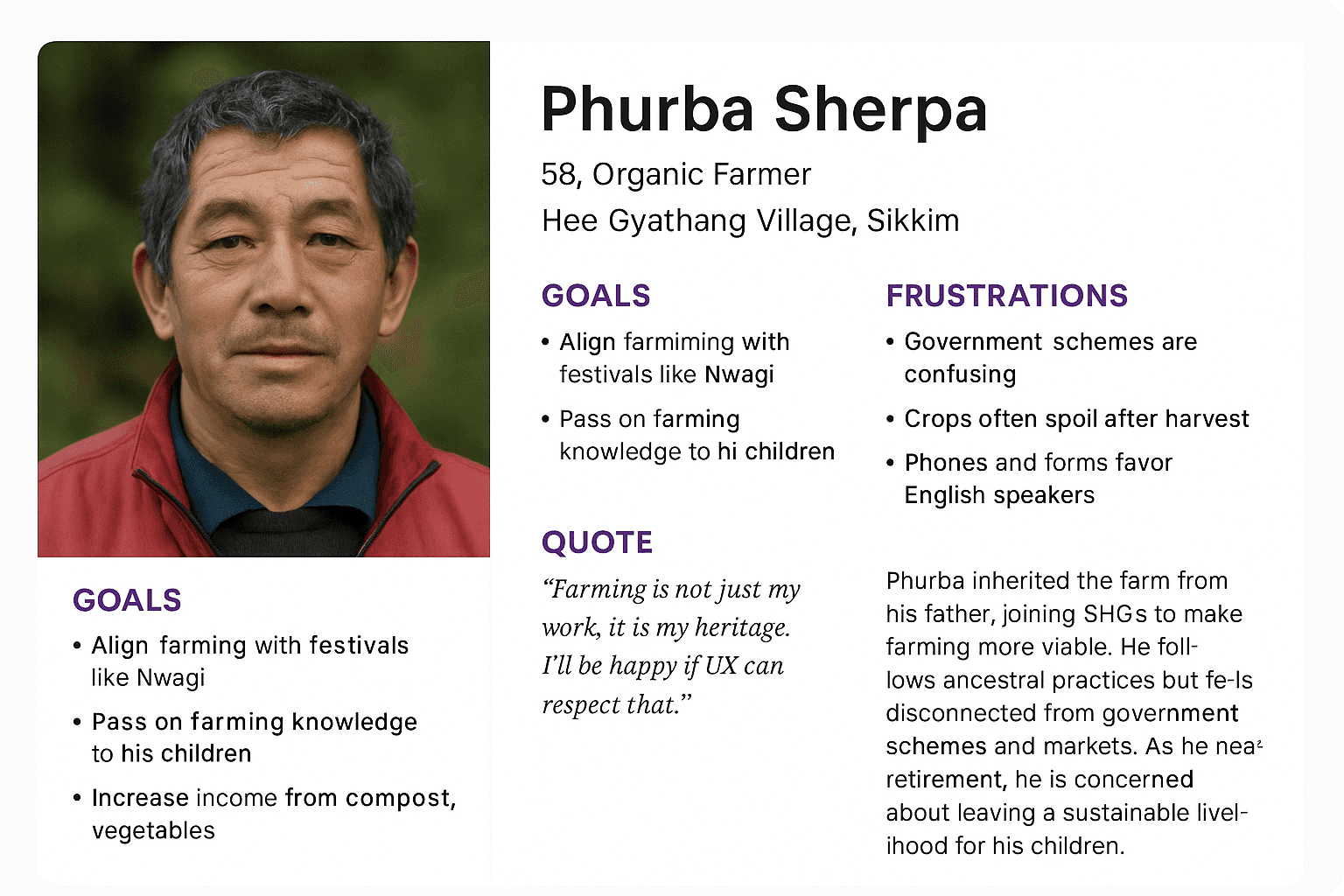
Meet the Users
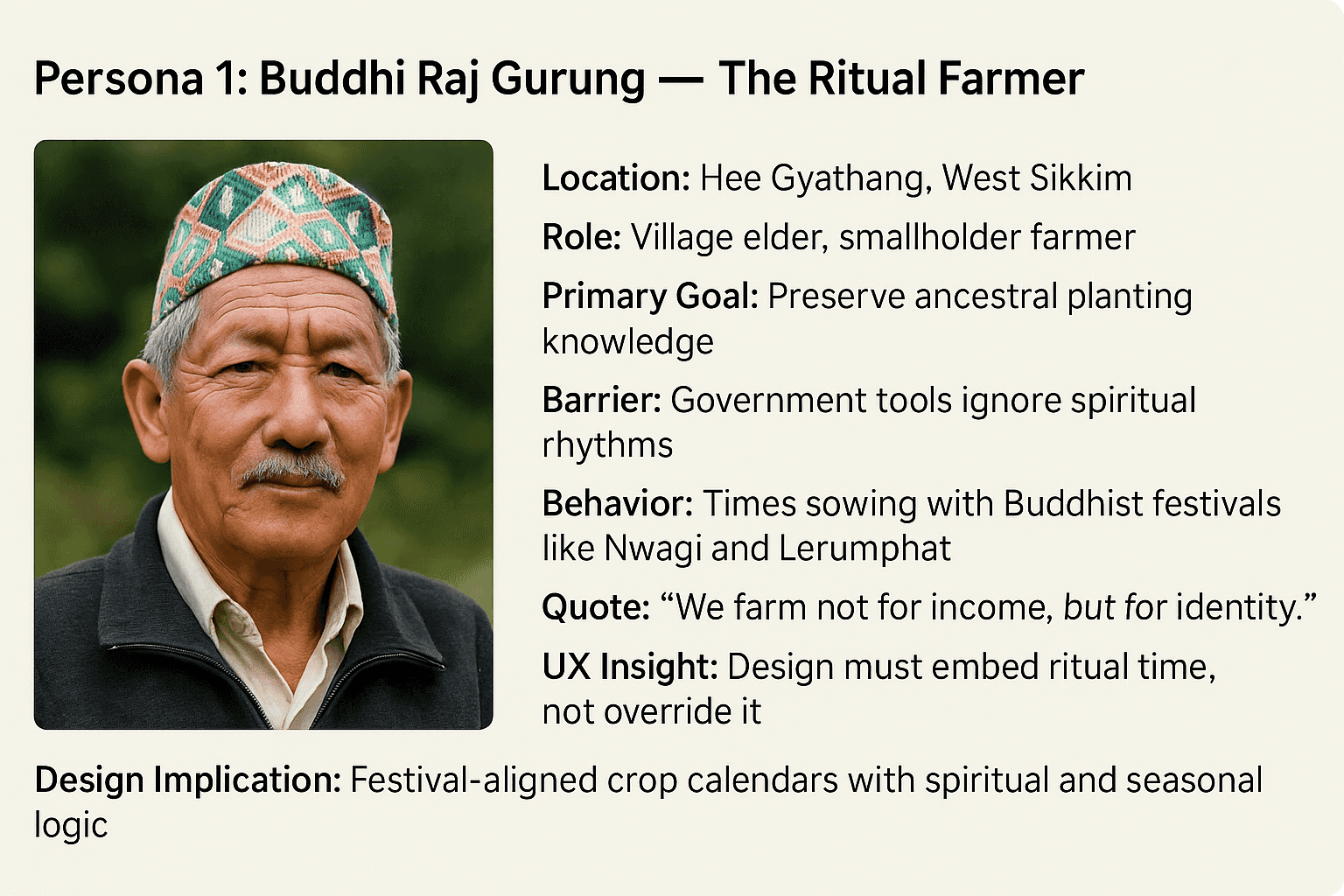
This project centered around 250+ smallholder farmers, including women-led SHGs, school-age youth, and local governance actors across five Himalayan villages in Sikkim.
They farmed on steep terrain, followed ritual calendars, and faced system-level friction, from scheme opacity to post-harvest spoilage.
“Organic wasn’t new it was ancestral. But support wasn’t.”
Designing With Farmers, Not For Them
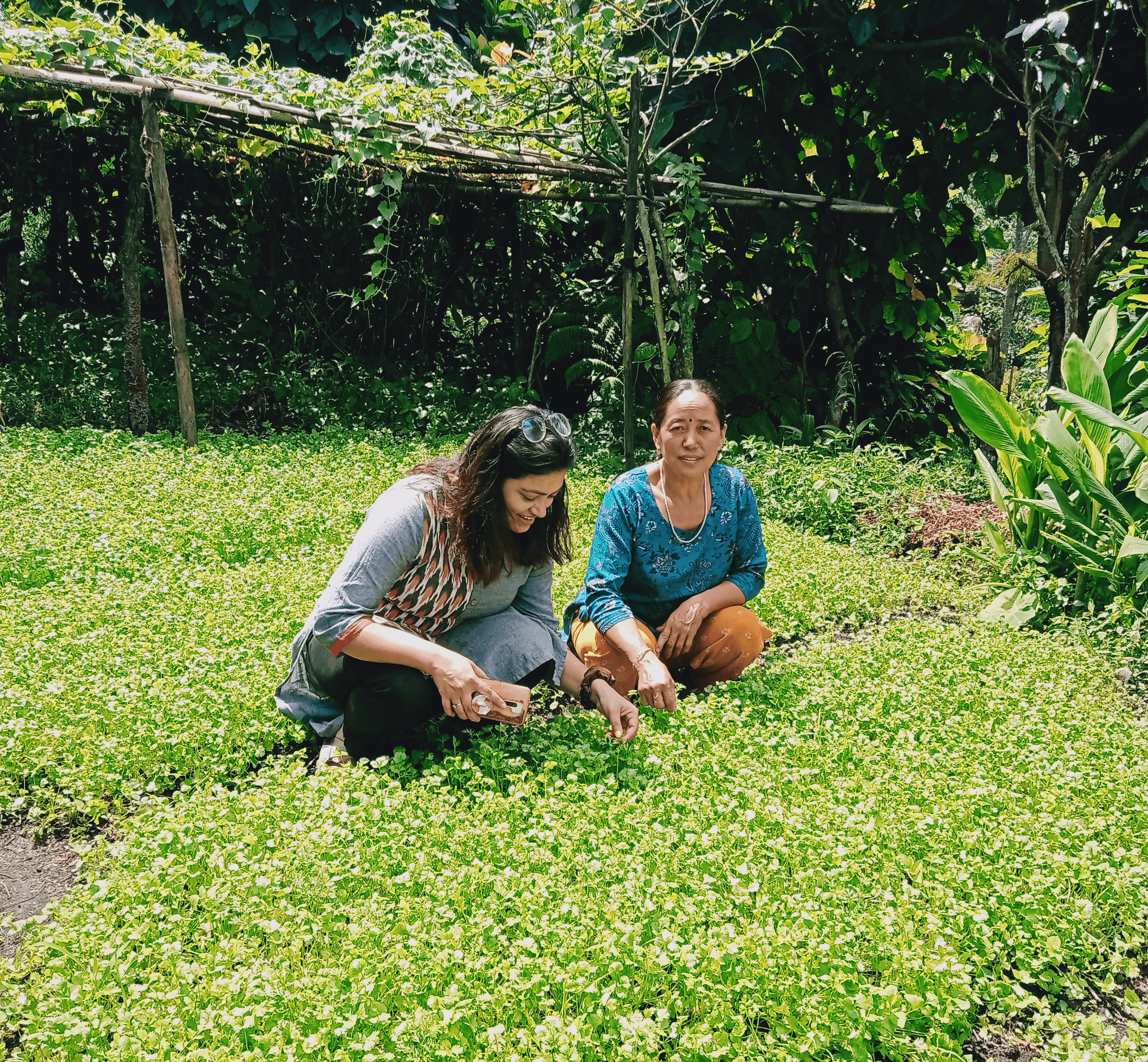
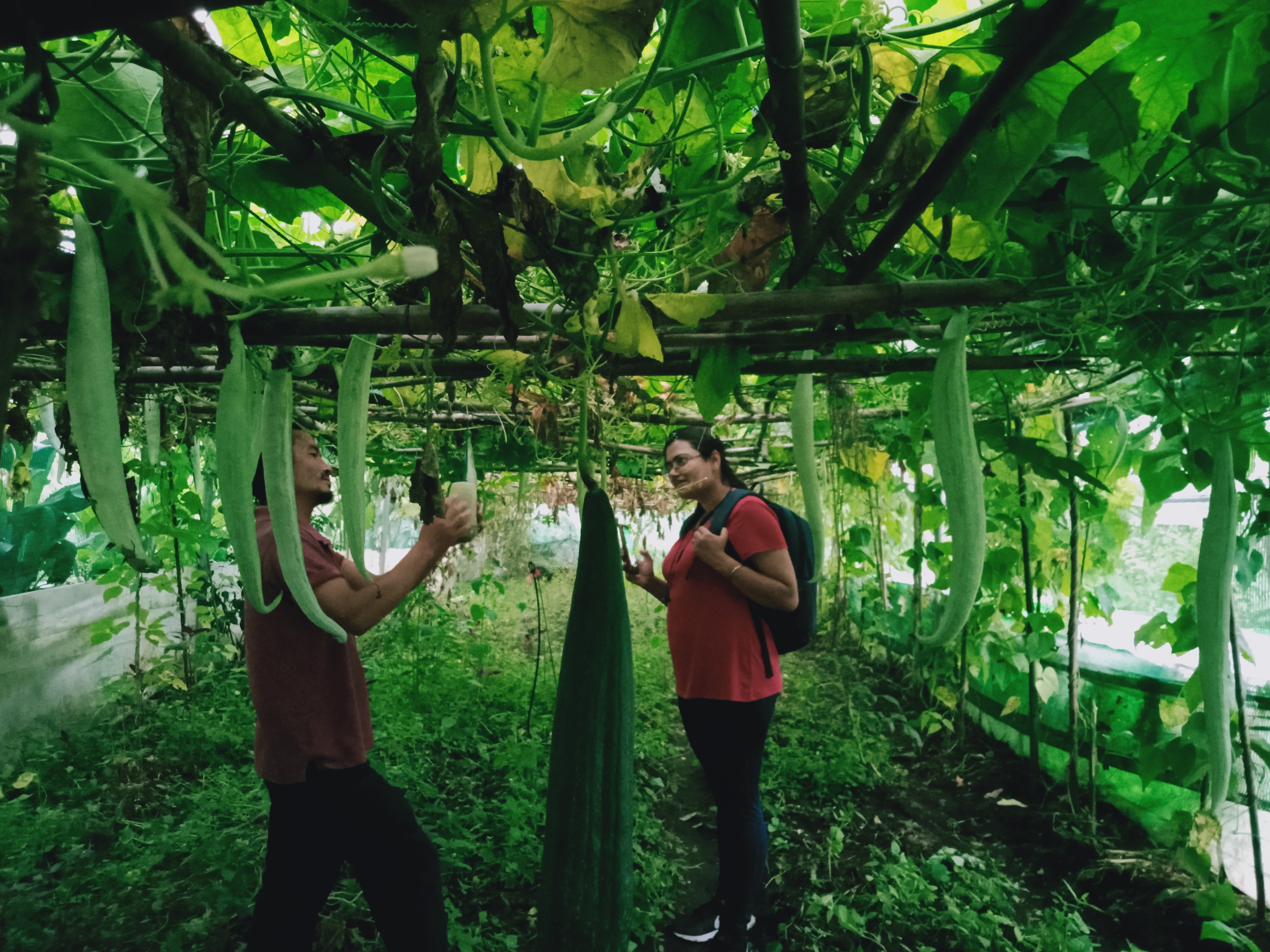
From 2021 to 2023, I committed to proximity, not just observation.
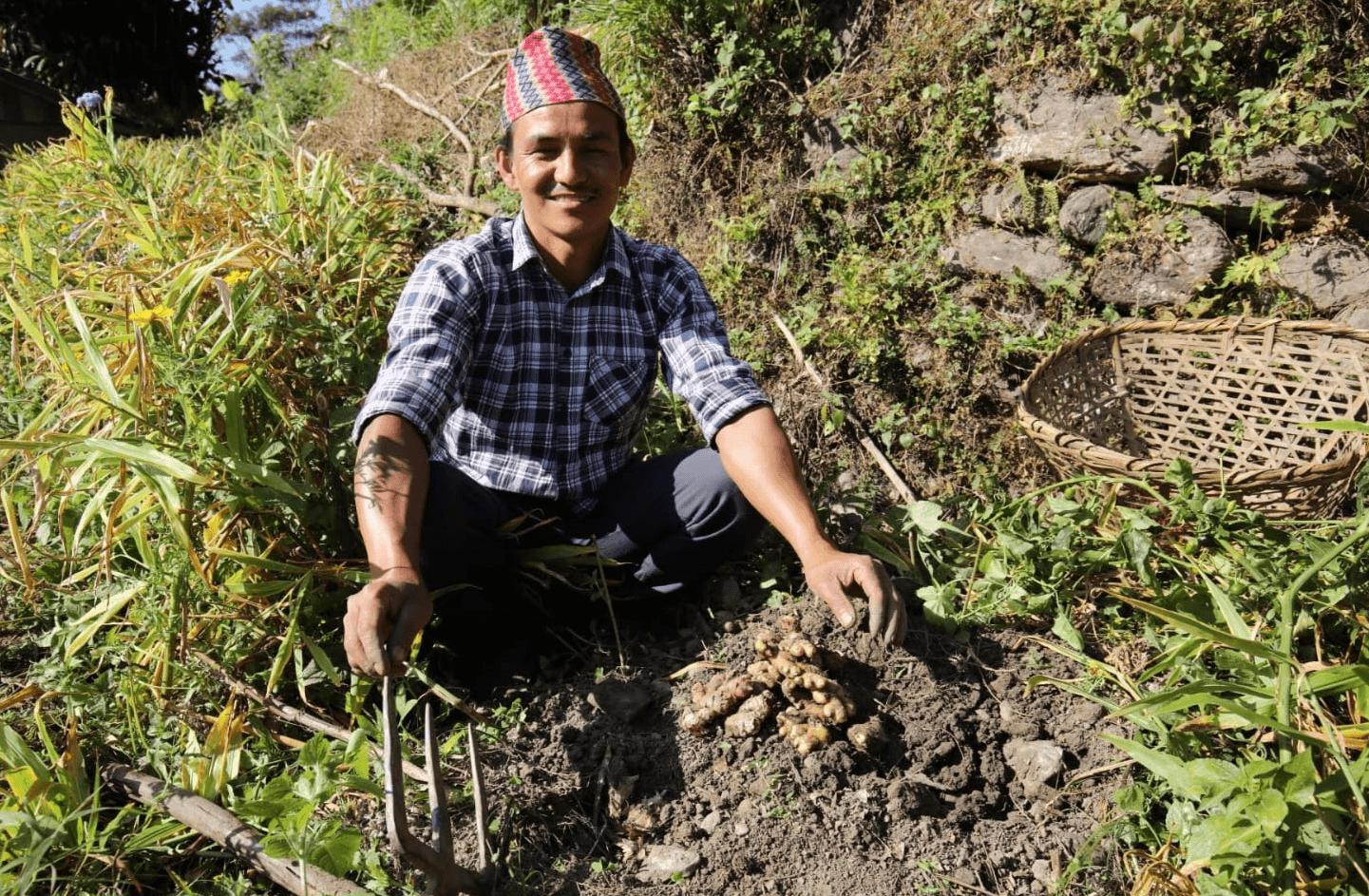
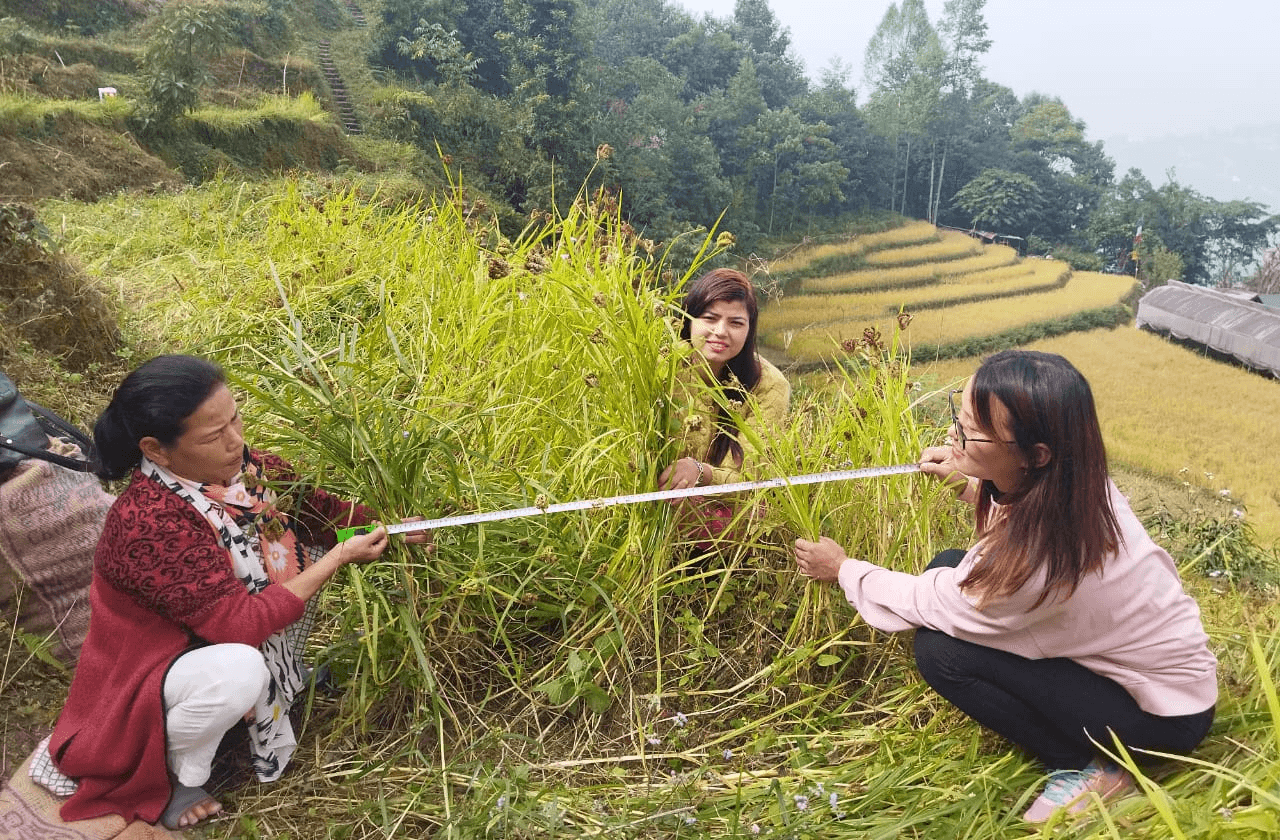
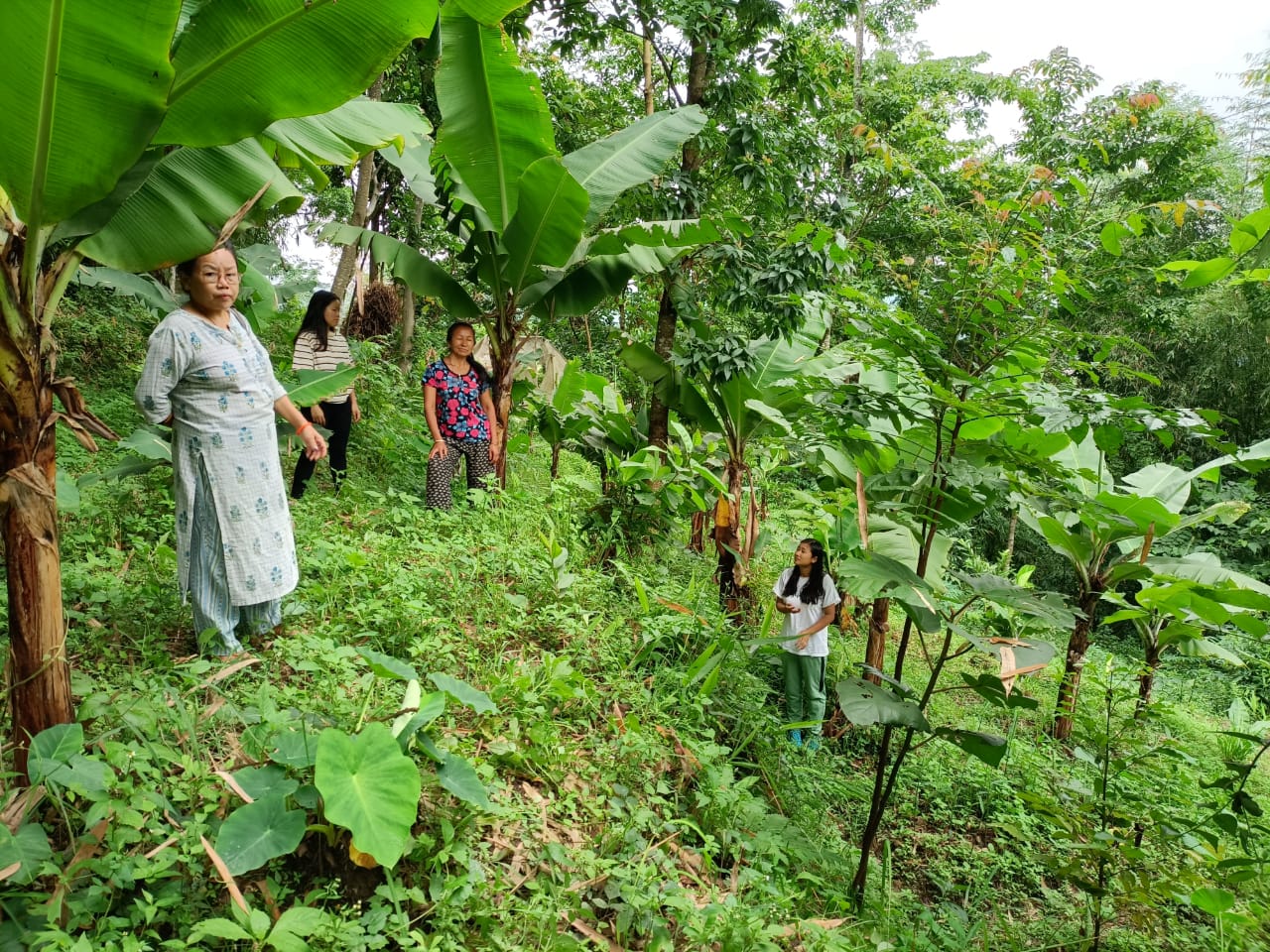
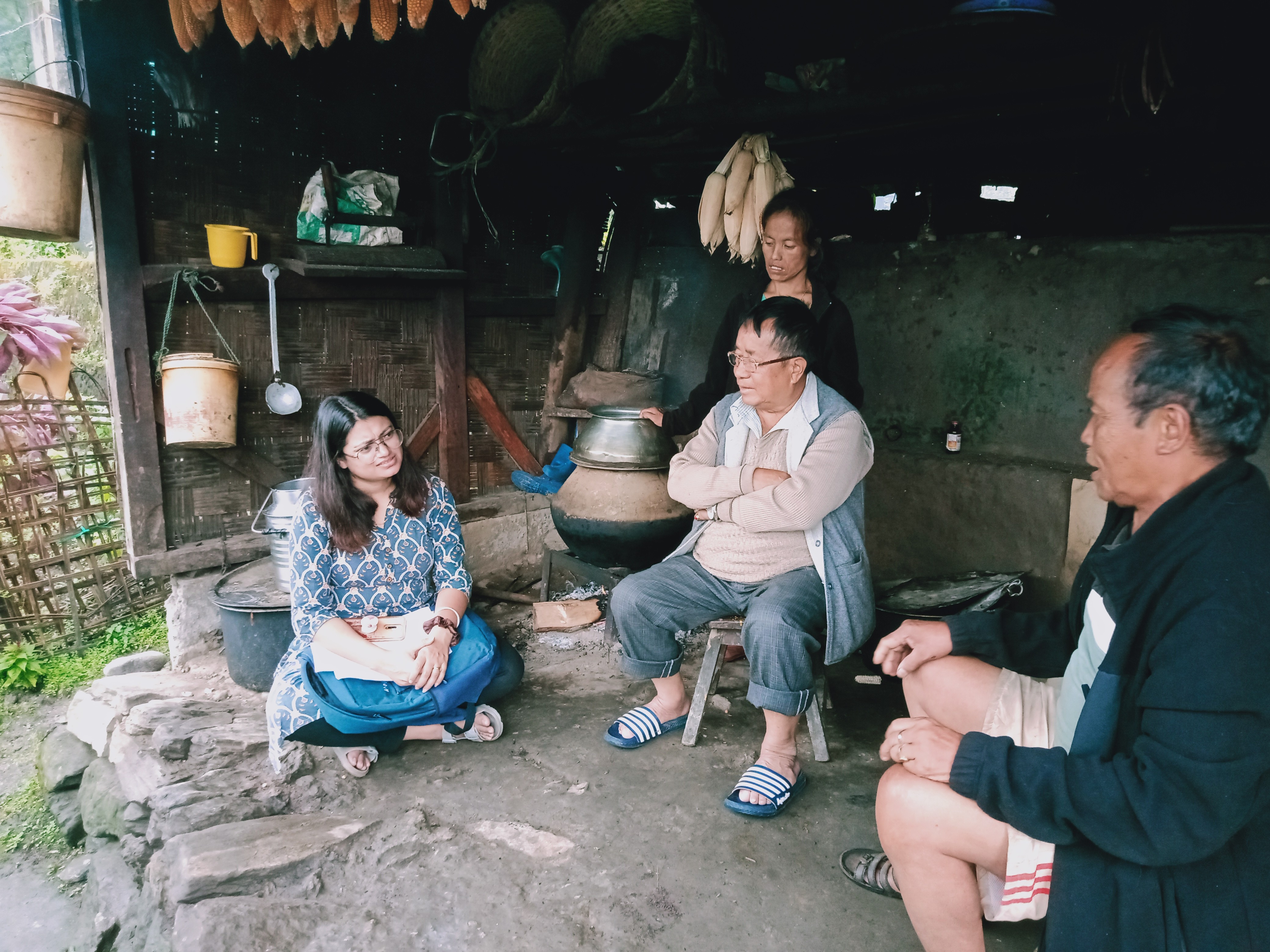
I lived in Hee Gyathang and Samdong across seasons, joining Nwagi and Lerumphat rituals, weeding fields, co-hosting SHG meetings, saving seeds, and documenting friction, from red tape to rainwater runoff.
Farmers in Sikkim weren’t just “users.” They were:
🌿 Navigators of fragile mountain ecosystems
📿 Practitioners of ritual calendars
📚 Keepers of ancestral, oral, and ecological knowledge
While policy treated them as passive beneficiaries, the design needed to recognize them as co-creators.
🧭 Immersive Ethnography
I worked side by side with farming families, not from behind a screen.
This wasn’t about usability testing; it was about rebuilding trust, from soil to system.
🤝 Co-Creation Over Consultation
In participatory workshops, farmers sketched tools, mapped frustrations, and redefined what “success” looked like.
Every prototype, from cold hubs to crop calendars, was grounded in shared rituals and rooted in trust.
“Organic wasn’t new to them it was how their grandmothers farmed, guided by lunar cycles and interdependence.”
A Broken Promise of Organic
Sikkim’s organic policy looked good on paper, but on the ground, farmers faced spoiled crops, inappropriate inputs, and fragmented support.
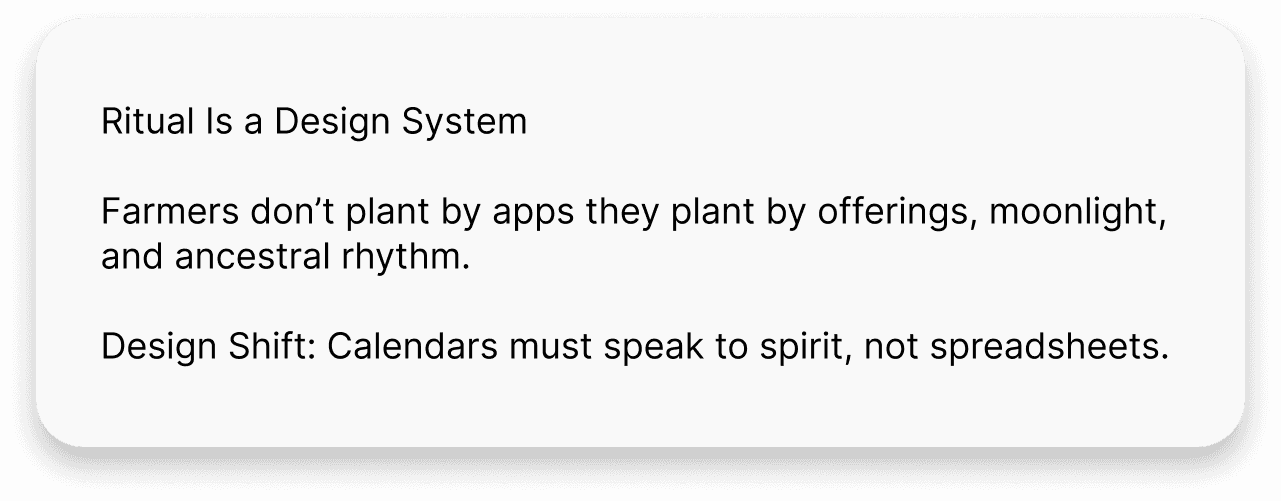
Ritual calendars were ignored.
Women-led SHGs remained invisible.
“We gave up chemicals, but gained no support.”
“Certification is just paperwork it didn’t raise our income.”
From Friction to Flow:
10 Pain Points
Over two years, we mapped systemic breakdowns and co-created real-world solutions with farmers.
Here’s what changed:
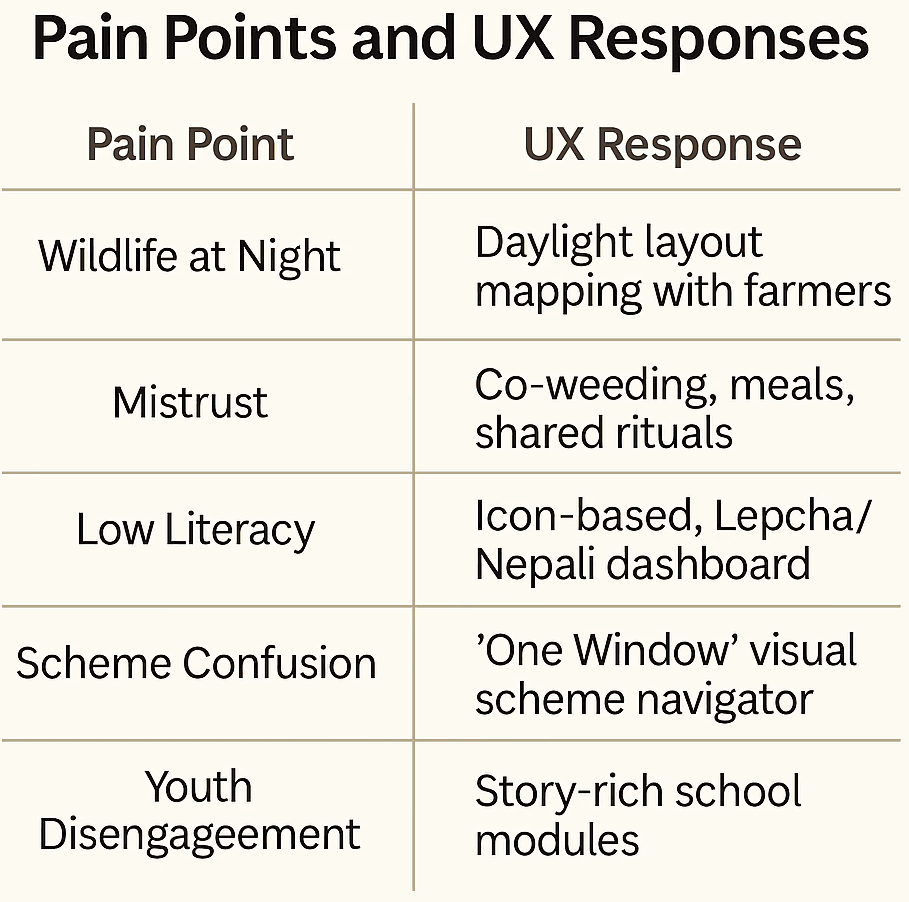
Designed a one-window, multilingual, offline dashboard.
60% boost in scheme clarity
Built an SMS/photo-based escalation system.
Enabled real-time support, even offline
Created ritual-aligned seasonal crop calendars.
Boosted seasonal planning confidence
Co-designed story-rich trailbooks with teens.
2× increase in youth interest in farming
Developed “Grown by Her” branding kits.
Improved income and visibility for SHGs
Matched inputs via terrain-aware SMS surveys.
Higher yield, lower frustration
Co-designed scent + noise deterrent kits.
Reduced losses with culturally valid tools
Built solar-powered, SHG-run cold hubs.
75% reduction in spoilage
Introduced QR-linked story labels (e.g., “From Phurba’s Field”).
Tripled product value
Added narrative packaging and ritual storytelling.
Increased emotional connection + repeat sales
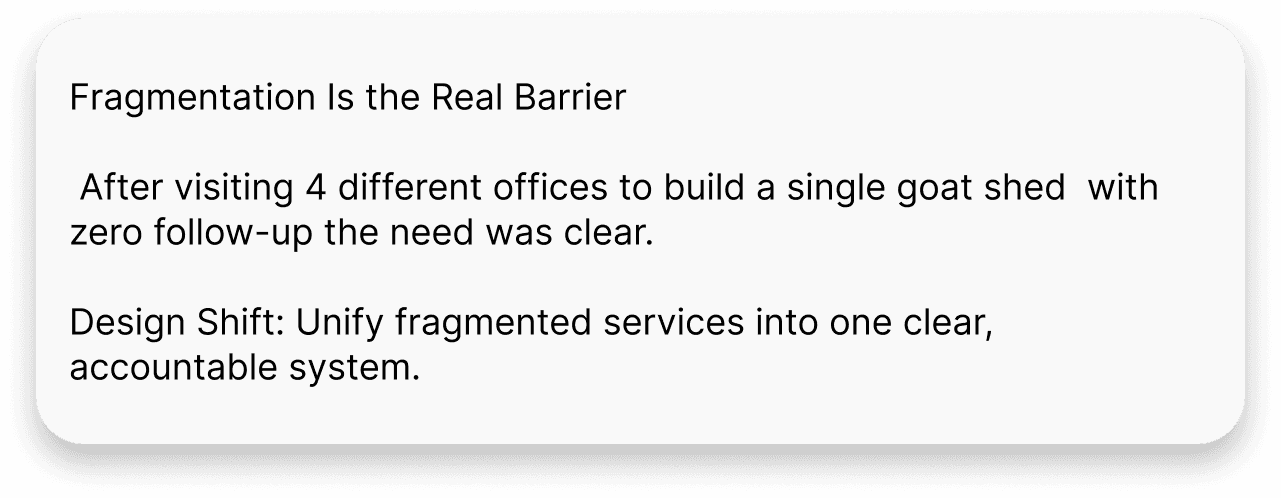
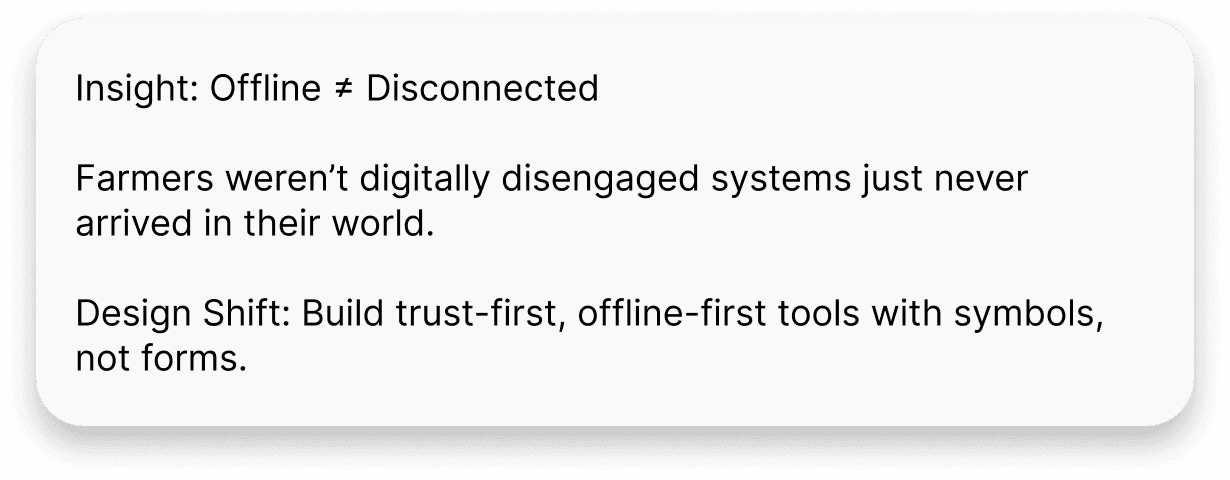
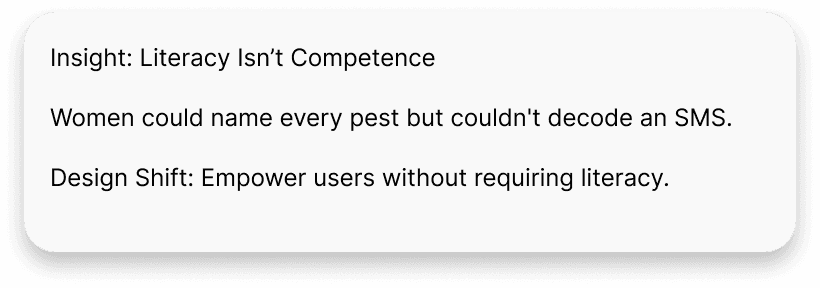
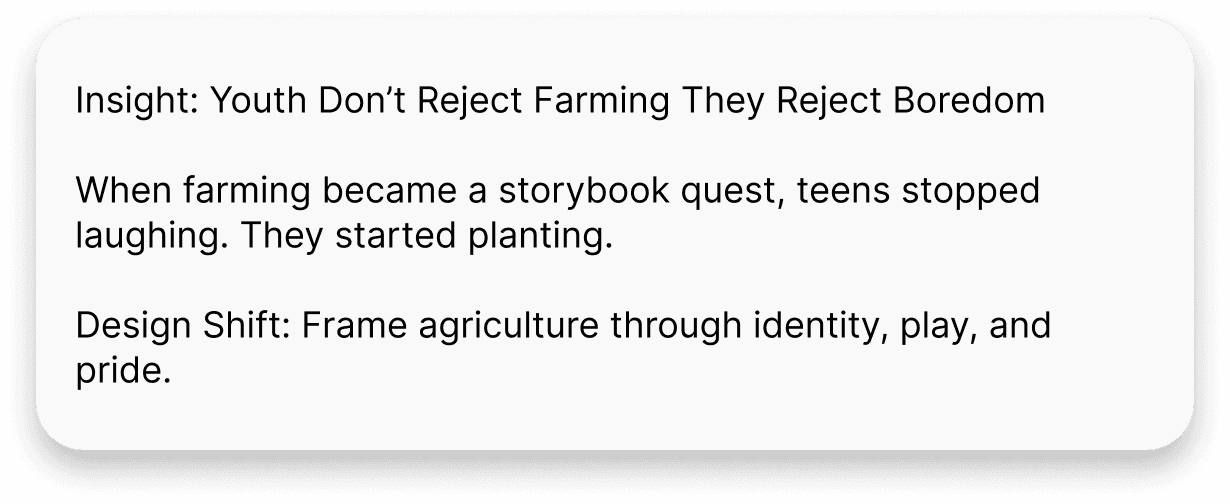
UX INSIGHT CARDS
These insights emerged from two years of immersive fieldwork and shaped every tool we co-designed.
Key Achievements
Over 2 years, we co-created 5 culturally grounded solutions that moved from concept to prototype across 5 villages:
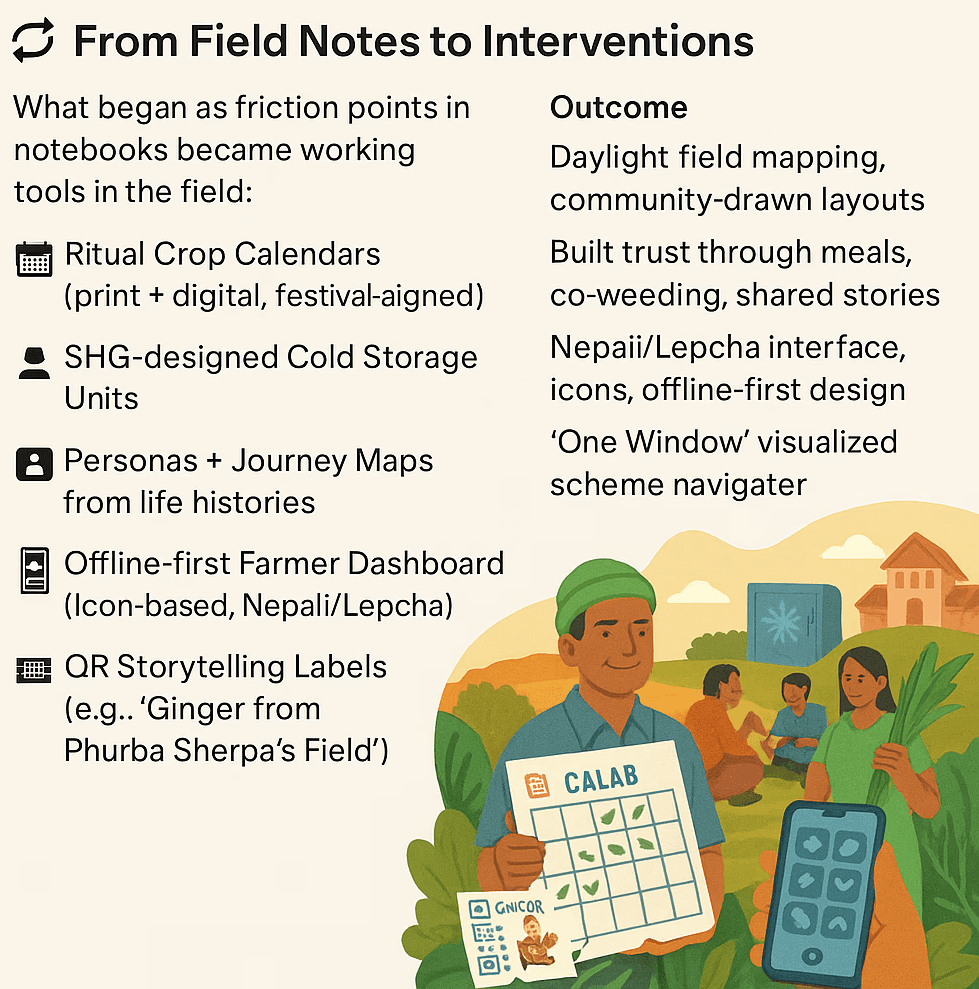
Ritual-Aware Crop Calendars – Seasonal sync with festivals like Nwagi
Offline Farmer Dashboard – Multilingual, low-literacy tool
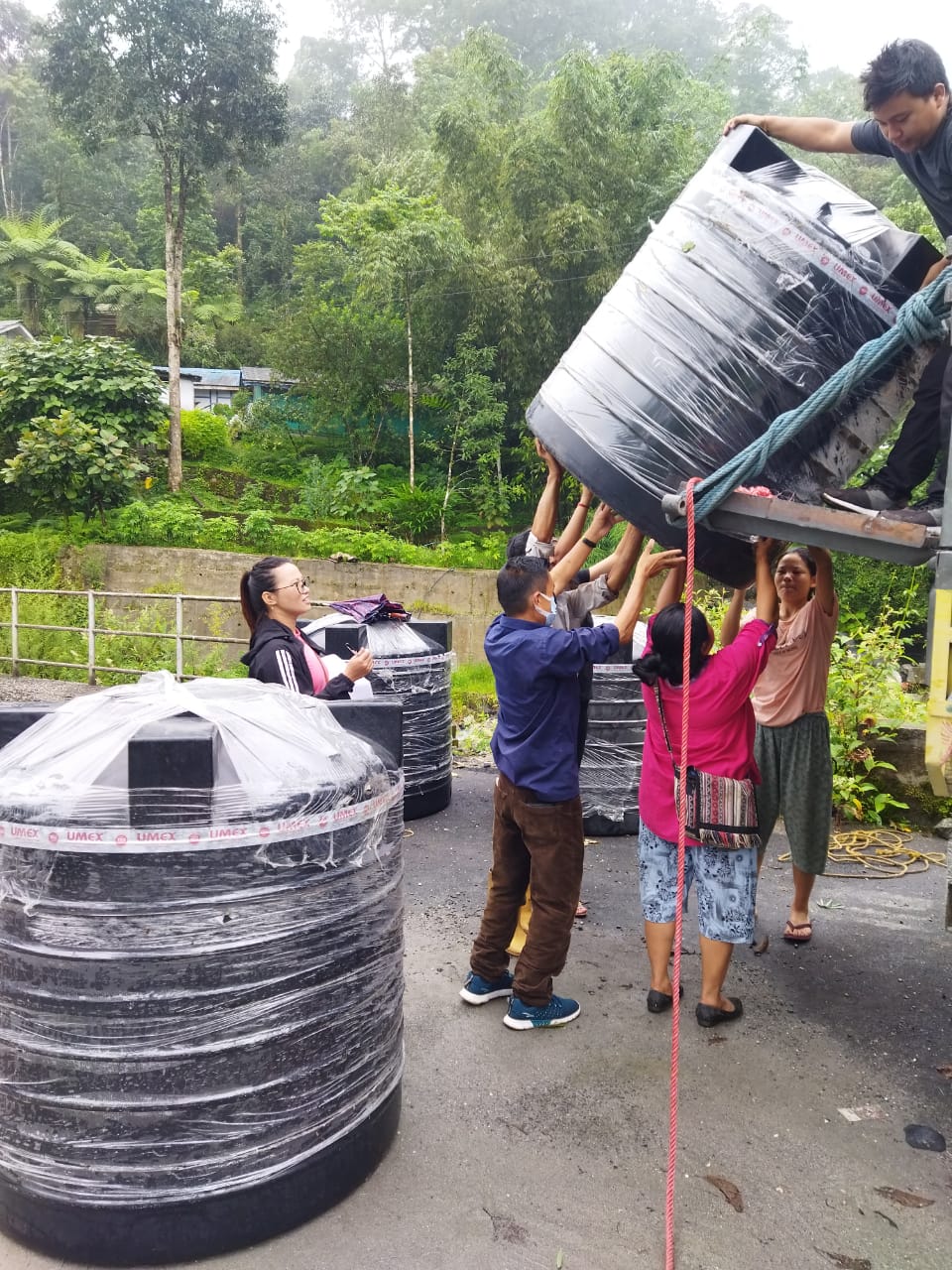
SHG-Led Cold Storage & Compost Hubs – Reduced spoilage by 75%
QR Story Labels – Tripled product value through buyer trust
Youth Trailbooks – 2× youth engagement in home farming
Real-World Outcomes:
Policy timelines now align with cultural calendars, while women-led SHGs generated new income through composting and branding initiatives. Farming is increasingly reframed as a source of identity and pride, rather than hardship.
Demonstrated Skills
Ethnographic Research: 250+ interviews, village immersion, friction mapping
Service Blueprinting: Unblocked fragmented support paths across departments
Participatory Co-Design: With SHGs, youth, and low-literacy farmers
Offline-first UX: Built multilingual tools for zero-connectivity zones
Narrative UX: QR-linked farmer stories rebuilt buyer trust
Youth UX: Gamified trailbooks improved farming identity in schools
Key Achievements by Area
Outcome
+60% scheme comprehension via offline, icon-based dashboard
Ritual calendars improved seasonal alignment and trust
QR labels raised produce value by 3×
75% spoilage reduction via SHG cold storage
2× increase in school-based farming participation
SHG visibility improved with “Grown by Her” kits
Live feedback via SMS/photo escalation tools
CO-CREATED SOLUTIONS: ROOTED IN CULTURE, BUILT FOR RESILIENCE
In collaboration with farmers, SHGs, and local institutions, we designed systems that honored tradition while solving real pain points.
📅 Ritual-Aware Crop Calendars
Enabled seasonal coordination by aligning planting cycles with festivals like Nwagi and Lerumphat.
📱 Offline-First Farmer Dashboard
Simple, multilingual access to schemes, alerts, and payments — designed for low literacy and no internet.
🧊 SHG Cold Storage & Compost Hubs
Women-led units that reduced spoilage, created income, and improved soil health through vermicomposting.
🧾 QR-Based Narrative Labels
Product tags linked to real farmer stories (e.g., “From Phurba’s Field”), building buyer trust and tripling product value.
📘 Youth Trailbooks
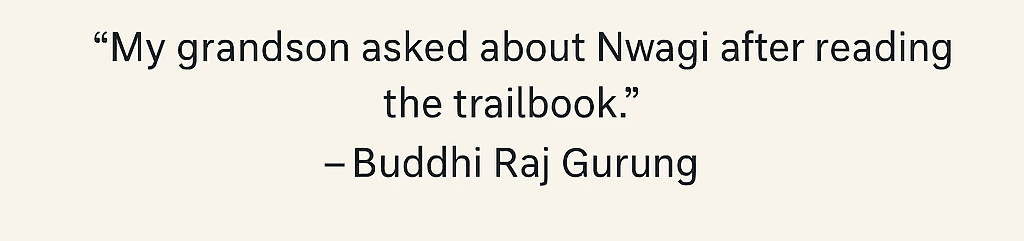
Story-rich, illustrated guides co-designed with local teens to reconnect them with farming as heritage, not hardship.
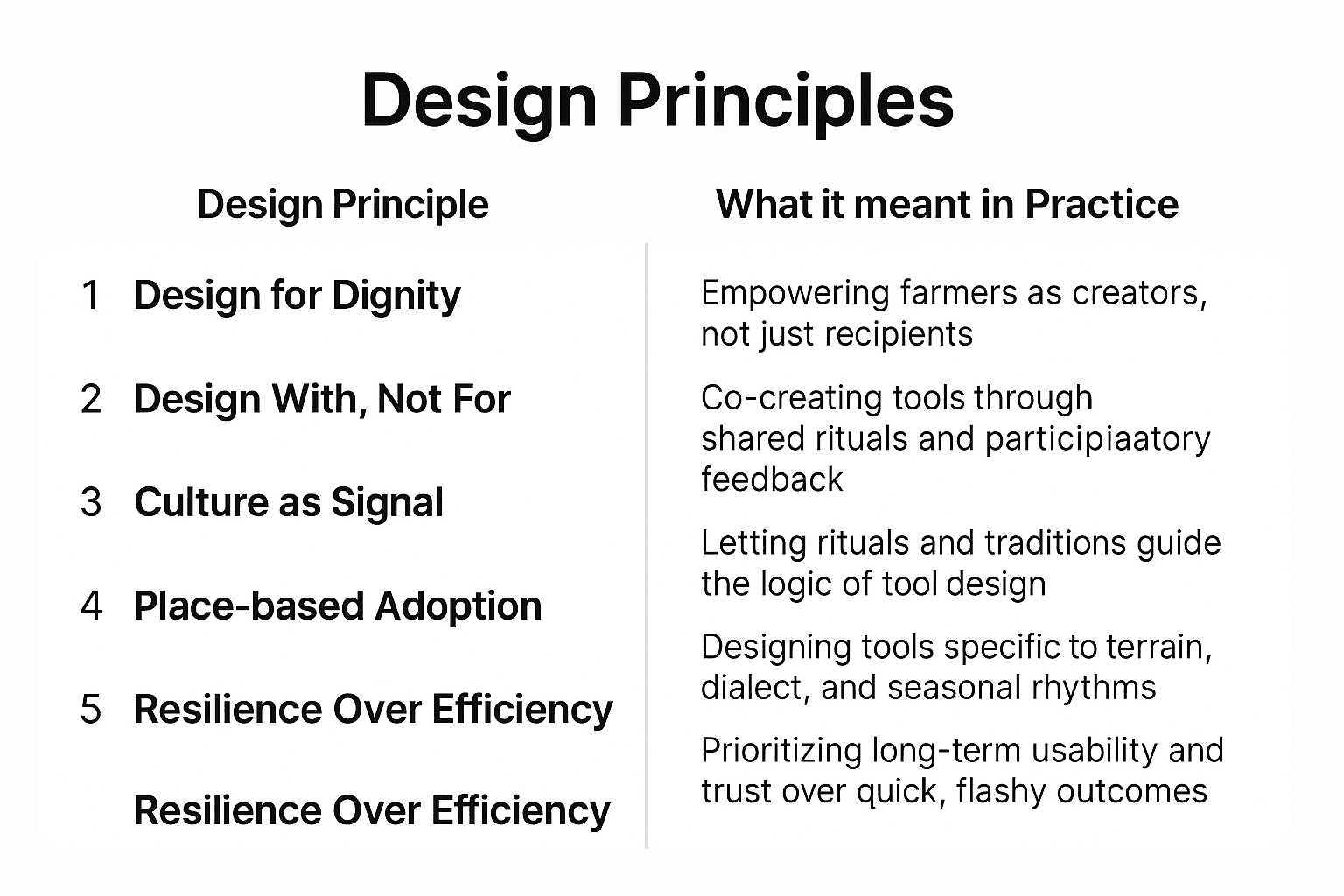
✳️ Design Principles That Guided This Work
🧊 Seasonal Storage Co-ops
7 families reduced post-harvest losses by syncing community fridges with local harvest calendars and shared SMS escalation.
📘 Youth Trailbooks in Samdong
Ritual-based storytelling doubled student engagement in farming lessons, reshaping farming as identity, not burden.
📊 Farmer Dashboards
Visual dashboards built with low-literacy farmers boosted scheme clarity by 60%, helping users know what, when, and how to access benefits.
🏷 QR Story Labels
Buyers paid 3× more when they could trace produce back to local families—trust turned storytelling into bargaining power.
🌱 Soil + Labor-Saving Compost Hubs
2 villages cut labor by 50% and raised yield 22% through co-owned compost hubs, designed with women's groups for easy rotation.
Real Impact, Rural Voice
Each intervention was more than a prototype — it was tested, trusted, and transformed into tangible outcomes.
Co-designed with farmers, these systems reduced spoilage, revived youth interest, clarified schemes, and brought dignity back to farming.
What I Learned: From Soil to System
Design must honor memory, not overwrite it. The most impactful systems weren’t built with tools they were shaped by trust, rituals, and lived time.UX succeeded when we listened first, designed second, and aligned with emotional and ecological rhythms.
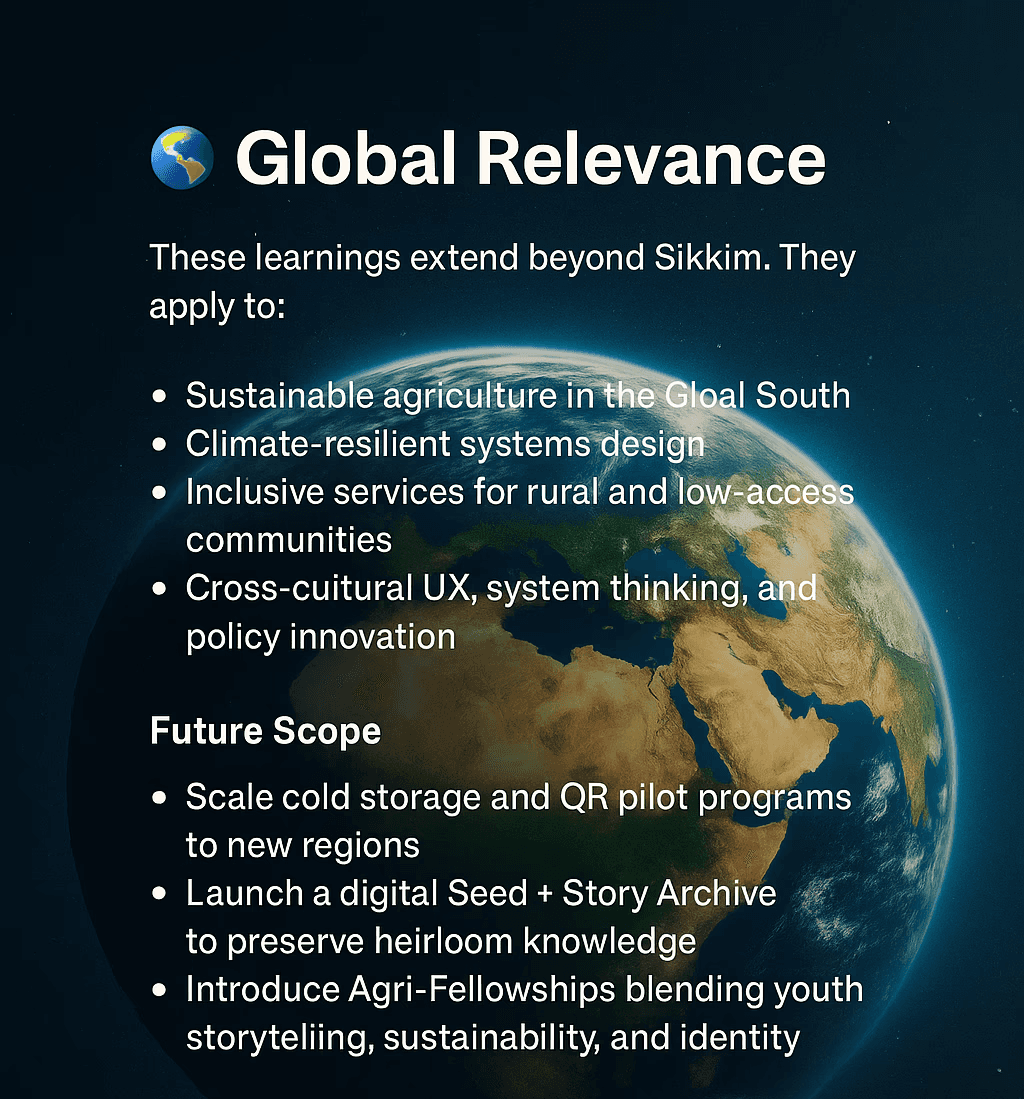
🧭 Beyond Sikkim: Designing for Inclusion Anywhere
This wasn’t just a farming project, it was a blueprint for inclusive design in hard-to-reach places.
🌍 Scalable Impact
Cold storage cut spoilage by 75%
QR story labels tripled product value
Ritual calendars improved policy alignment
Trailbooks doubled youth engagement
🎯 Who It’s For
Agri-NGOs
Rural UX designers
Government planners
Inclusive service teams
🧠 Why It Matters
Design must listen, not impose. These systems worked because they honored identity, not just usability.
This wasn’t just about organic farming it was about dignity, memory, and systems that listen.
Design is not always digital. It can begin in the soil, the stories, and the seeds we choose to honor.
“Our seeds are not just seeds. They are memory.” — Mayal Lepcha
UX Toolkit Used:
Systems Mapping · Ethnography · Inclusive Design · Narrative UX · Educational UX · Feedback Flows