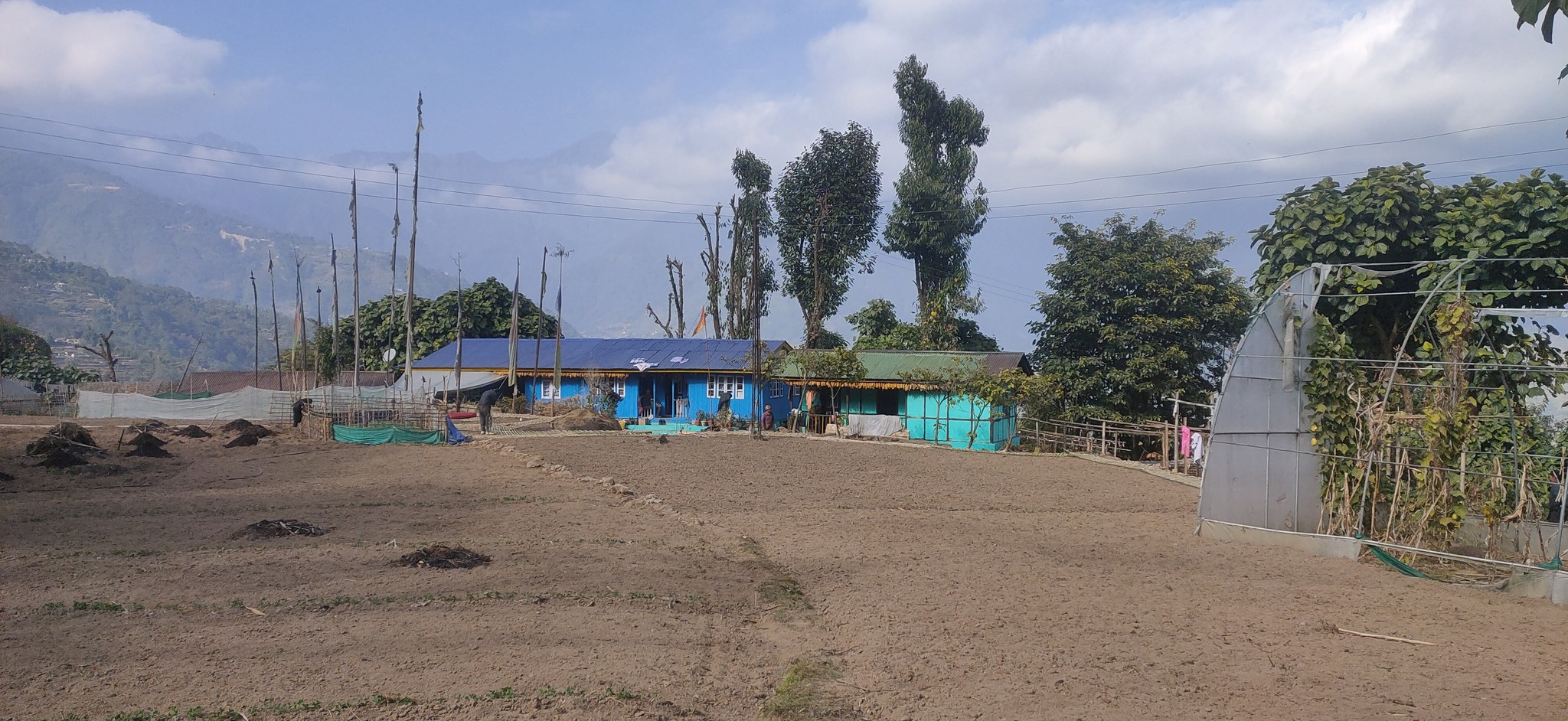
📍 Location: Machnoor Village, Andhra Pradesh
🕰️ Duration: 30 days fieldwork + 1 week synthesis
👤 Role: UX Researcher · Field Lead · Co-Designer
🛠️ Approach: Led a 25-member field team, conducted immersive ethnography, and co-created design tools with Panchayat members using co-design and service mapping
👥 Users: First-time elected women leaders in Panchayati Raj
📦 Deliverables: Personas, UX insight cards, visual prototypes
✅ Outcome: NGO collaboration and pilot feedback in 3 villages
Project Overview
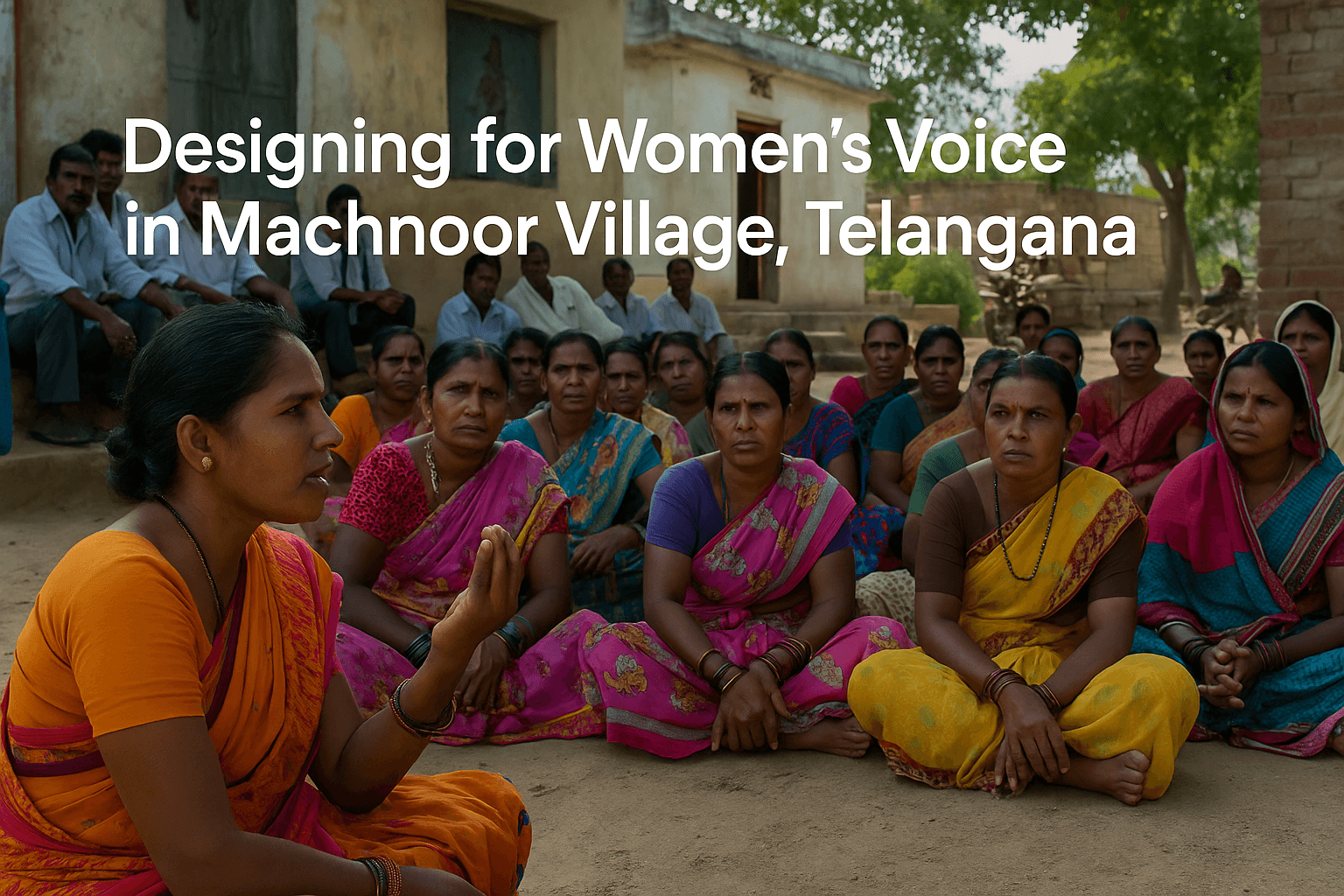
India’s Panchayati Raj Act reserves a third of local government seats for women.
But in Machnoor village, I met elected women who sat silently in meetings, signed forms they didn’t understand, and often let male relatives speak on their behalf. One woman told me, “I sit in the back because I don’t know what to say.”
Over several weeks of fieldwork, I listened, observed, and co-created with these women not just to understand their barriers, but to design with them. We mapped pain points, prototyped tools like visual onboarding kits and feedback flows, and reimagined what civic participation could feel like.
This wasn’t just a policy analysis. It was a question of usability and trust:
This was my question:
Is governance usable for the women it claims to empower?
I didn’t just document the system I embedded myself within it. I joined meetings, walked to ward offices, and co-created tools from women’s lived realities.
Our Approach: Embed→Listen→Reframe
👣 Embed
We didn’t begin with surveys. We began with presence.
I lived in Machnoor village, not as an outsider extracting answers, but as an observer immersed in the day-to-day lives of elected women. I joined Panchayat meetings, visited homes, and noticed who spoke and who didn’t.
🪶 Listen
Instead of asking direct questions, I listened for discomfort in gestures, silences, and hesitations.
Women rarely spoke about politics directly. But their posture in public spaces, the way their sons answered for them, the documents they signed without reading all of this told a deeper story.
🧠 Reframe
This wasn’t a failure of policy. It was a UX failure.
We reframed issues of “proxy leadership” and “low participation” as problems of onboarding, emotional safety, and inaccessible systems not lack of intelligence or motivation.
By treating governance like a broken service flow, we could reimagine it as something design could fix not just law.

Problem Statement
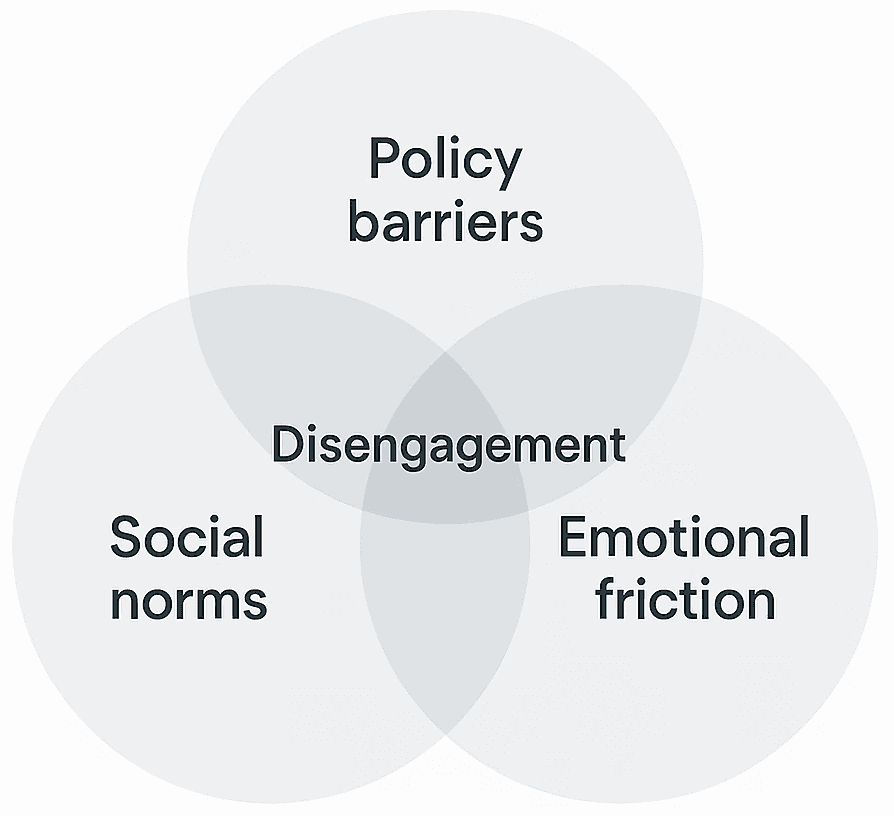
Giving someone a seat without orientation is like giving them a platform without onboarding, accessibility, or emotional safety they disengage or let others take over.
Women elected under Panchayati Raj faced critical usability breakdowns:
❌ No onboarding or orientation
❌ No feedback loops
❌ No safe space to speak
❌ Unreadable documents
❌ High emotional risk
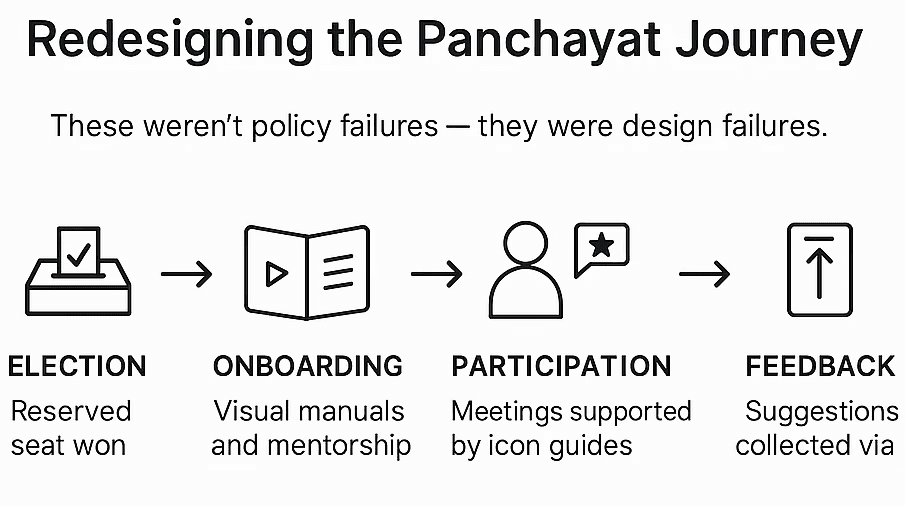
These weren’t policy failures they were design failures.
Research Objectives
Assess the real usability of governance systems for elected women
Understand friction points, social permissions, and emotional blockers
Propose design interventions rooted in trust, clarity, and accessibility
MADHAVI (35)
"The Silenced Voice"
Elected Sarpanch in name, invisible in action
Madhavi is an upper-caste woman elected as Sarpanch under the reservation quota. However, in practice, her husband made all the decisions. Though she holds the title, she remains silent in meetings — a symbolic figure with no real power. She’s respectful of tradition but internally questions her role.
“I was the Sarpanch on paper, but he was the one who spoke.”
Needs
Safe spaces for public speaking without judgment
Cultural permission to participate meaningfully
Peer mentorship from experienced women leaders
Step-by-step onboarding to understand her responsibilities
Pain Points
Symbolic power without functional authority
Social pressure to conform to gender norms
Fear of being mocked or silenced
No access to governance know-how or language
Behaviors
Attends meetings silently
Leans on husband for interpretation
Appears passive, but is observant and curious
Fulfills role out of duty, not ownership
UX Insight
This is not a lack of capability — it’s a cultural usability gap. Madhavi doesn’t need training; she needs a permission-based design model that acknowledges social frictions.
Design Opportunities
Women-only peer circles for storytelling and rehearsal
Audio/visual onboarding tools for low-literacy settings
Husband-inclusive orientation to deconstruct power dynamics
Gradual leadership simulations with support scaffolding
UX Research Methods Used (Mixed Methods)
🧠 Contextual Inquiry
Observed elected women in real-life settings homes, meetings, and daily village activities to understand power, silence, and space.
🗣️ Unstructured Interviews
Held 15+ conversational interviews with elected women, their families, and Panchayat peers. Let emotion guide flow over fixed questions.
🧩 Ethnographic Case Studies
Mapped 4 unique behavioral profiles to represent different levels of agency, motivation, and constraint within the system.
👣 Field Immersion
Lived in Machnoor village for 3 days to gain trust, join rituals, and document the emotional nuance missing from policy design.
UX insight and design opportunity
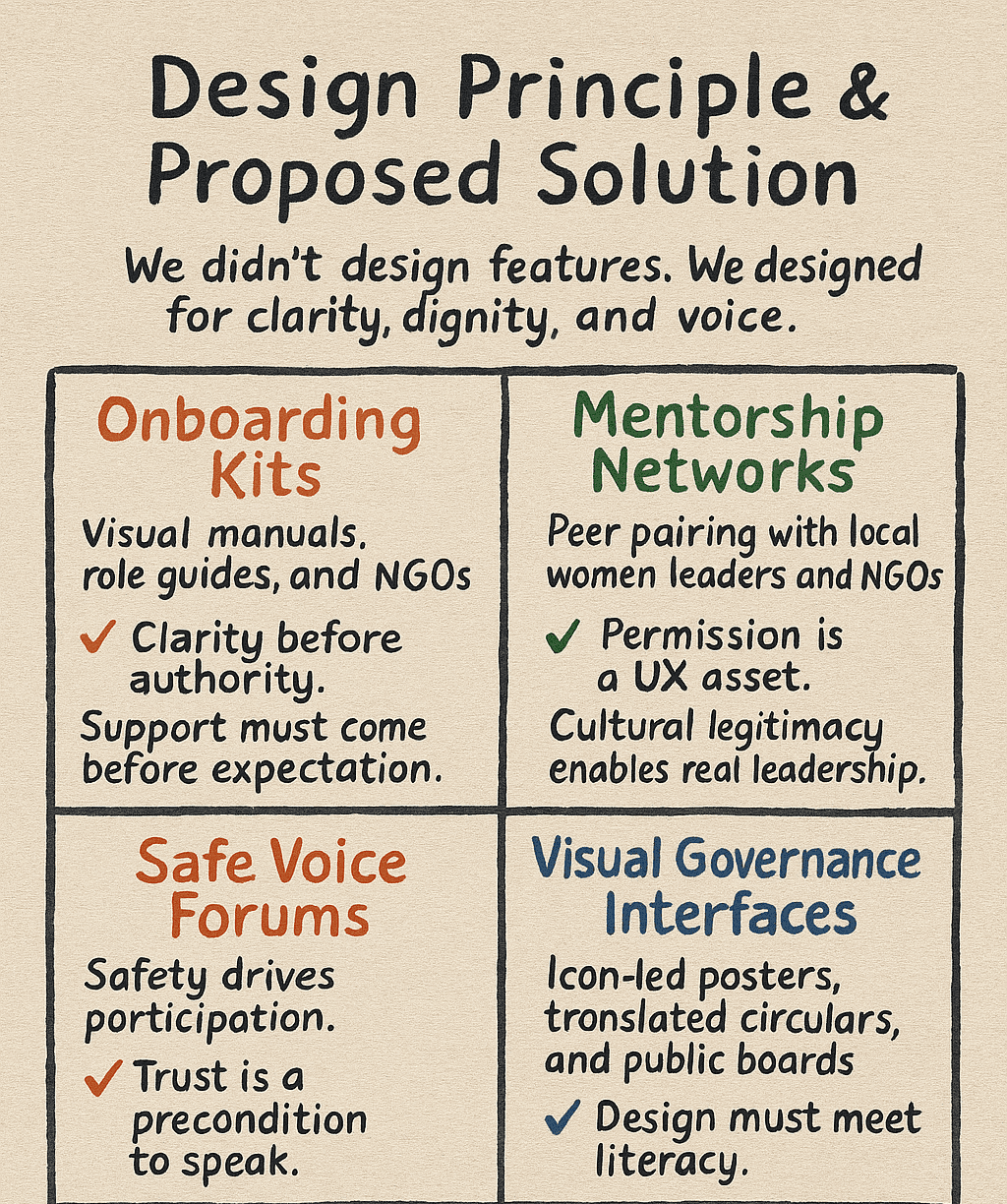
What We Designed
Designed an onboarding kit: visual role map + local-language handbook + video snippets via WhatsApp
Co-created trust-verification flow using symbol stamps and mentor pairing to ensure agency
Introduced icon-based meeting posters + translation stickers + community board summaries
Piloted monthly ‘safe voice’ forums with anonymous storytelling and support circles
Built SMS-based anonymous feedback loop and village suggestion walls
UX INSIGHT CARDS
🧩 Barrier:No Onboarding
🔁 UX Parallel: High drop-off
👀 Observation: Women didn’t know what to do after being elected no role clarity or system orientation.
🧩 Barrier: Proxy Governance
🔁 UX Parallel: Misused credentials
👀 Observation: Male relatives operated on behalf of elected women, undermining autonomy.
🧩 Barrier: No Feedback Loop
🔁 UX Parallel: No iteration from users
👀 Observation: Women were never asked for feedback systems lacked mechanisms for user input.
🧩 Barrier: No Visual Support
🔁 UX Parallel: Inaccessible interfaces
👀 Observation: Government documents were in unreadable formats or unfamiliar scripts.
🧩 Barrier: Trust Gaps
🔁 UX Parallel: Low emotional safety
👀 Observation: Women feared public speaking, making mistakes, or being shamed emotional friction went unaddressed.
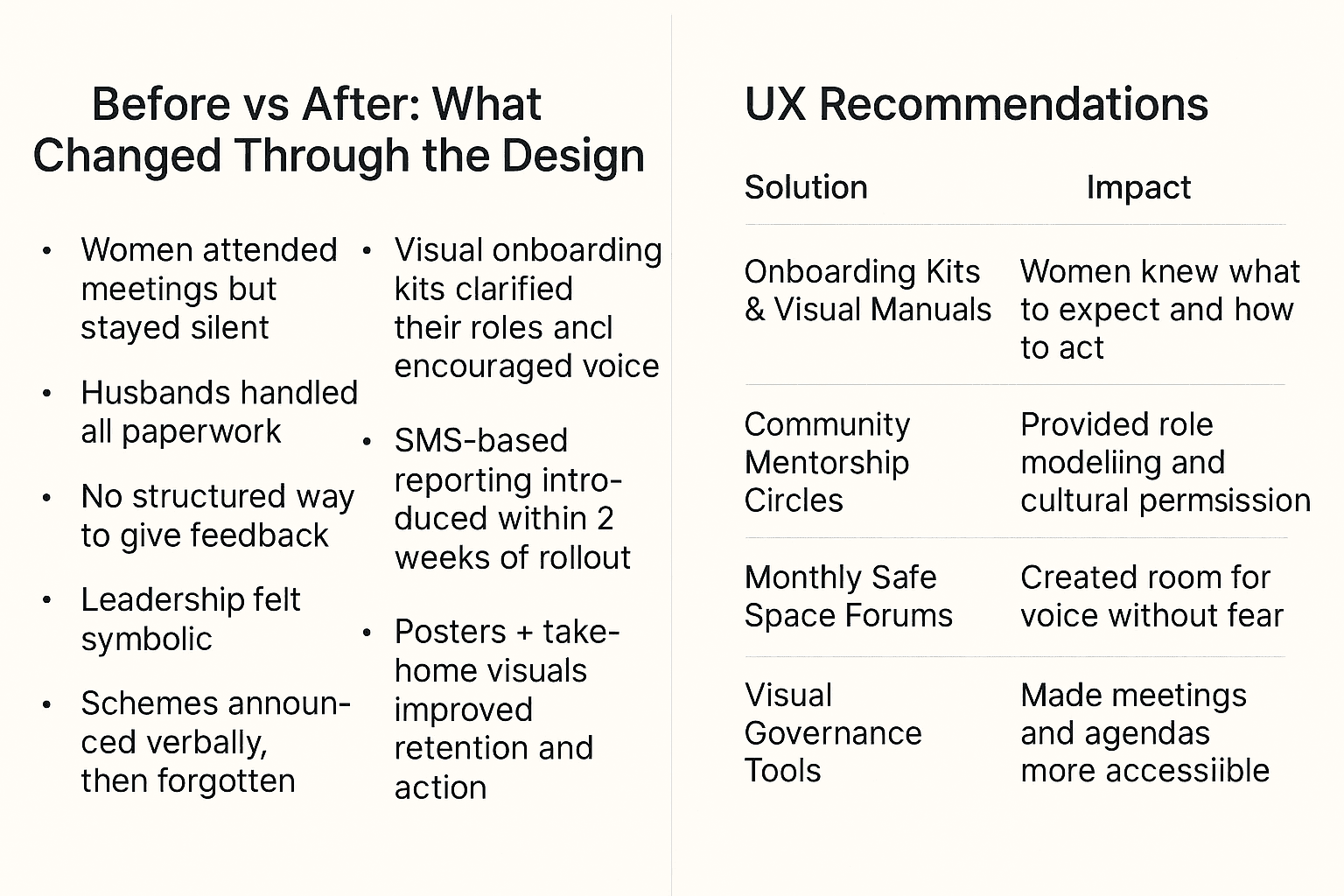
Early Validation & Impact
Early Validation & Impact
Even before full rollout, these ideas sparked real feedback and co-ownership:
🗣️ “Now I finally understand what I was supposed to do.” — one elected woman requested extra visual kits for her peers
🤝 NGOs began piloting mentorship circles using the persona cards
💬 The first-ever anonymous feedback loop started outside a Panchayat office.
These prototypes sparked ideas for future onboarding systems and rural service blueprints.
How might we make governance not just available, but usable especially for first-time, low-literacy users?
Conclusion: Designing for Trust, Not Just Titles
This project didn’t start with user flows it started with silence.
The silence of women who were elected but unheard.
The silence of systems that assumed access meant empowerment.
The silence that comes when trust, clarity, and safety are missing.
What we found is that governance, like any complex service, needs onboarding, emotional safety, and cultural fluency. The problem wasn’t ability it was design.
By reframing Panchayati Raj through a UX lens, we revealed that:
Proxy governance is a symptom of poor affordance
Fear of speaking is a UX barrier, not just a social one
And legitimacy isn’t granted by law it’s earned through visibility and trust.
Empowerment isn’t a policy toggle. It’s a systems design challenge.
Where We Go Next
🛠️ Prototype Development
Co-create onboarding kits, role maps, and visual guides with local NGOs for distribution to newly elected women leaders.
🧪 Rural Usability Testing
Test icon-based posters, training tools, and safe forum models in 2–3 additional villages to iterate based on lived feedback.
🎯 Define Engagement Metrics
Establish baseline indicators for “meaningful participation” not just attendance, but decision-making and initiative-taking.
🤝 Policy + NGO Partnership
Share findings with state-level governance bodies and women’s collectives to influence inclusive civic design strategy.
Let’s Build Systems That Empower
If you're designing for access, ask: is it usable, safe, and emotionally inclusive?
I’d love to talk more about co-designing inclusive civic systems.
Toolkit Used
Service Blueprinting · Ethnographic Fieldwork · Civic UX · Accessibility Design · Persona Mapping · Behavioral Insight Synthesis
Designed by Ranjeeta Adhikari · Ethnographer & UX Researcher