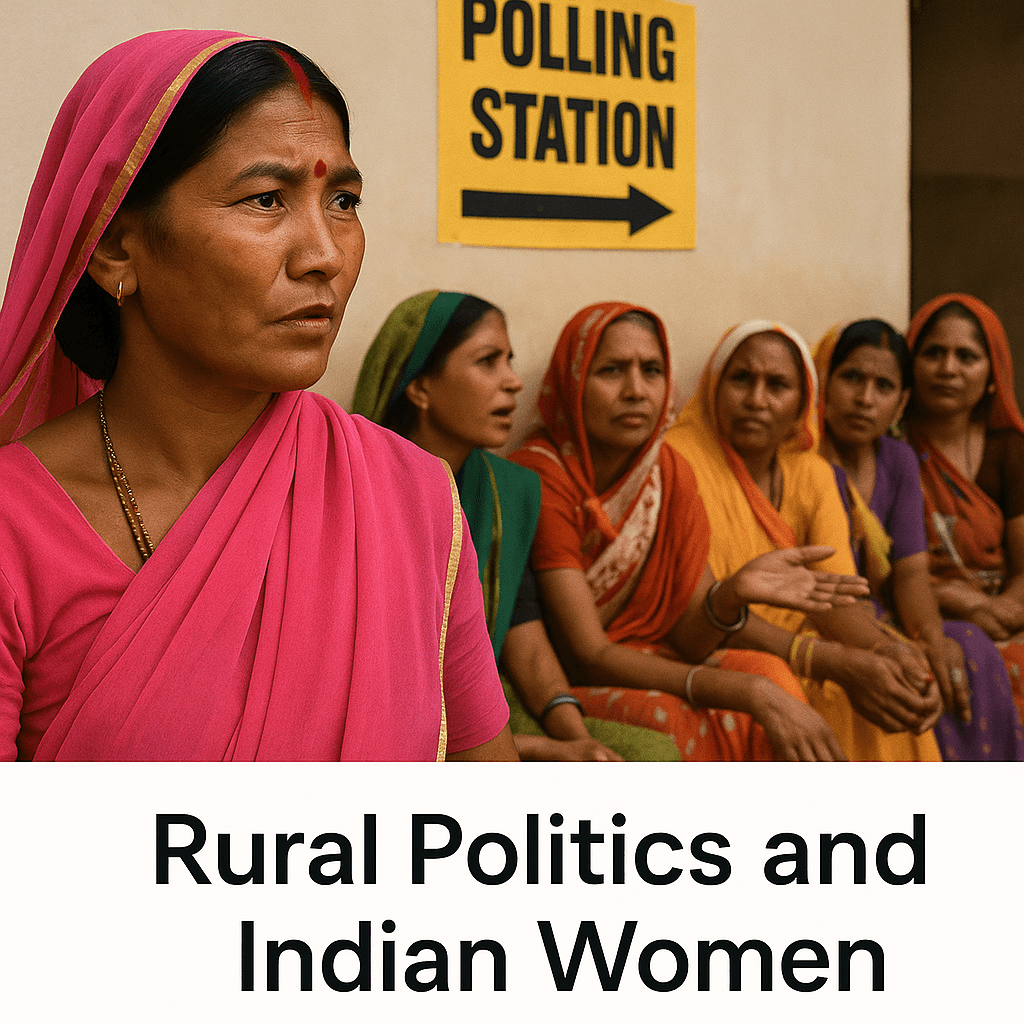
Reserved. Elected. Silenced?
Designing with First-Time Women Leaders in India’s Panchayati Raj
Reserved. Elected. Silenced?
Designing with First-Time Women Leaders in India’s Panchayati Raj
📍 Location: Machnoor village, Telangana, India
⏳ Duration: 30 days fieldwork + 1 week synthesis
🧑🏽🔬 Role: UX Researcher · Field Lead · Co-Designer
🎯 Focus: Governance usability, emotional safety, first-time women leaders in rural India
How can governance systems move from tokenism to lived leadership?
This question drove my ethnographic UX study with first-time elected women representatives in the Panchayati Raj system.
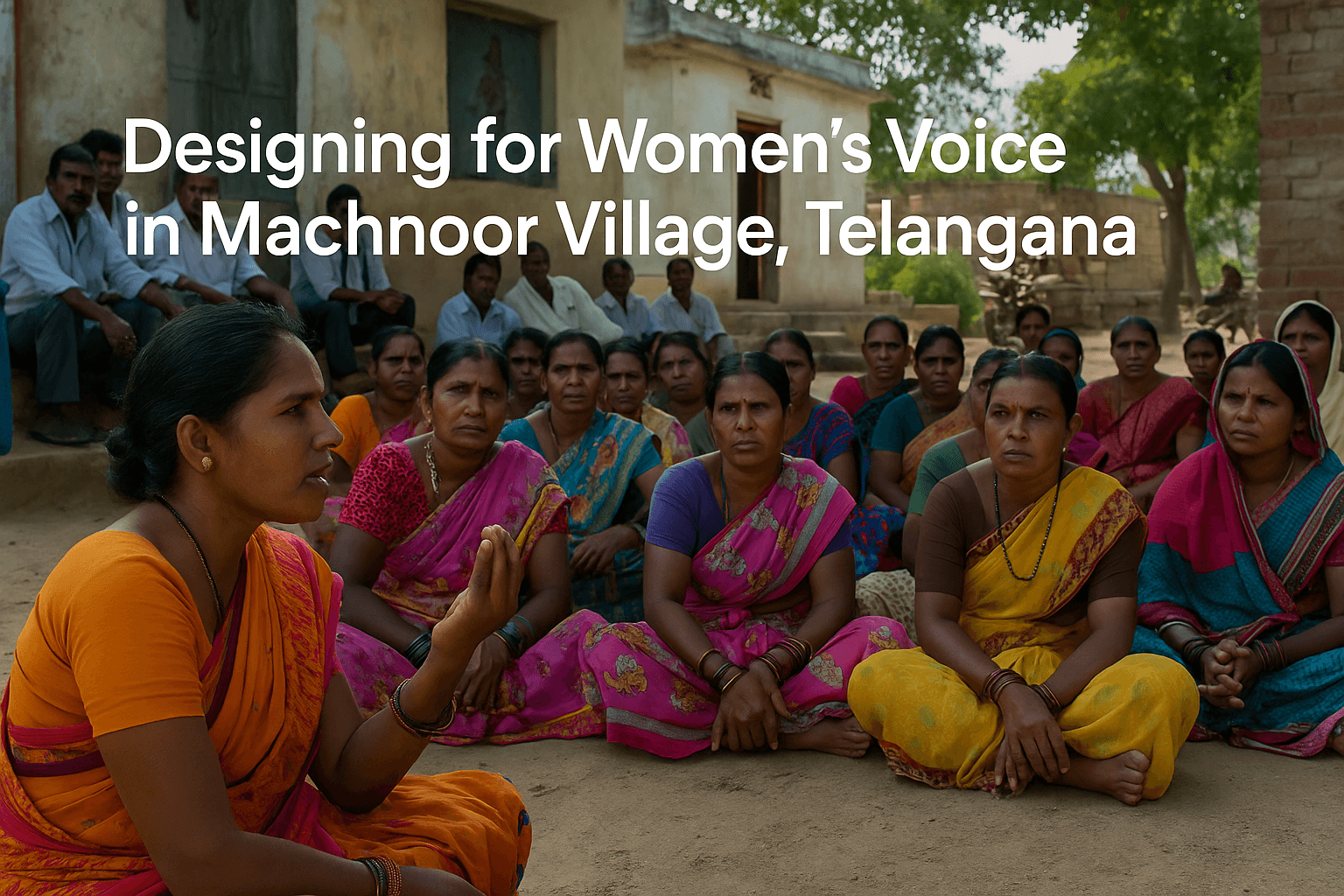
In Machnoor, women held seats in local councils but often remained silent in meetings, navigating patriarchal norms, procedural complexity, and limited training. Representation existed on paper, but participation lagged in practice
How can governance systems move from tokenism to lived leadership?
This question drove my ethnographic UX study with first-time elected women representatives in the Panchayati Raj system.
In Machnoor, women held seats in local councils but often remained silent in meetings, navigating patriarchal norms, procedural complexity, and limited training. Representation existed on paper, but participation lagged in practice
How can governance systems move from tokenism to lived leadership?
This question drove my ethnographic UX study with first-time elected women representatives in the Panchayati Raj system.
In Machnoor, women held seats in local councils but often remained silent in meetings, navigating patriarchal norms, procedural complexity, and limited training. Representation existed on paper, but participation lagged in practice
The Challenge
India’s Panchayati Raj system reserves one-third of rural council seats for women — a milestone in policy.
But for many first-time women leaders, the role came without support:
Meetings dominated by men, sidelining women’s voices
Procedures & forms only in official language, unfamiliar to many
No onboarding or training for navigating council work
Social norms discouraging women from speaking in public
The result? Symbolic representation without real influence, eroding confidence and limiting impact.
The Challenge
India’s Panchayati Raj system reserves one-third of rural council seats for women — a milestone in policy.
But for many first-time women leaders, the role came without support:
Meetings dominated by men, sidelining women’s voices
Procedures & forms only in official language, unfamiliar to many
No onboarding or training for navigating council work
Social norms discouraging women from speaking in public
The result? Symbolic representation without real influence, eroding confidence and limiting impact.
Listening Between the Lines
Three systemic barriers shaped the problem:
Information gaps – Women lacked clear guidance on council duties.
Language barriers – No resources in local dialects.
Confidence deficit – Public speaking and decision-making felt unsafe or unfamiliar.
Listening Between the Lines
Three systemic barriers shaped the problem:
Information gaps – Women lacked clear guidance on council duties.
Language barriers – No resources in local dialects.
Confidence deficit – Public speaking and decision-making felt unsafe or unfamiliar.
My Approach
Over three months in Machnoor, I:
Lived alongside women leaders during their early months in office.
Mapped meeting dynamics to understand how and when women’s voices were excluded.
Co-created tools with elected women, council members, and local NGOs.
Developed role-play and scenario-based training tailored to village governance issues.
Methods included:
My Approach
Over three months in Machnoor, I:
Lived alongside women leaders during their early months in office.
Mapped meeting dynamics to understand how and when women’s voices were excluded.
Co-created tools with elected women, council members, and local NGOs.
Developed role-play and scenario-based training tailored to village governance issues.
Methods included:
Immersive ethnography: Participating in daily life, attending council sessions, shadowing leaders.
Interviews & shadowing: Speaking with elected women, male council members, clerks, and NGO trainers.
Service mapping: Documenting the official vs. actual journey of raising an issue in council.
Participatory co-design: Creating tools in workshops that women could test immediately in real meetings.
Methods included:
Immersive ethnography: Participating in daily life, attending council sessions, shadowing leaders.
Interviews & shadowing: Speaking with elected women, male council members, clerks, and NGO trainers.
Service mapping: Documenting the official vs. actual journey of raising an issue in council.
Participatory co-design: Creating tools in workshops that women could test immediately in real meetings.
Outcome
I co-created three confidence-building and usability tools:
Panchayat Starter Kit – Step-by-step guide in local language with visual cues for agenda items.
Meeting Practice Cards – Role-play prompts to prepare for common council debates.
Issue Tracker Board – A simple, visible tool to follow issues from proposal to resolution.
Piloted in Machnoor, these tools:
✔ Helped 100% of participants speak at least once in council meetings during the trial
✔ Reduced dependency on male intermediaries for submitting proposals
✔ Were adopted by a local NGO for rollout in two more villages
Outcome
I co-created three confidence-building and usability tools:
Panchayat Starter Kit – Step-by-step guide in local language with visual cues for agenda items.
Meeting Practice Cards – Role-play prompts to prepare for common council debates.
Issue Tracker Board – A simple, visible tool to follow issues from proposal to resolution.
Piloted in Machnoor, these tools:
✔ Helped 100% of participants speak at least once in council meetings during the trial
✔ Reduced dependency on male intermediaries for submitting proposals
✔ Were adopted by a local NGO for rollout in two more villages
What I Learned
Confidence is a practice, not a policy.
Systems must give tools and safe spaces for new voices to become lasting ones.
Why It Matters
This project showed how UX can transform reserved seats into active participation.
By working within women’s lived realities, I designed tools that were visual, local, and usable in real time — not abstract policy documents.
Why It Matters for Design
This work demonstrates my ability to:
Conduct deep ethnographic research in gender-sensitive contexts
Translate lived experience into actionable design interventions
Create tools that shift power dynamics in public governance
What I Learned
Confidence is a practice, not a policy.
Systems must give tools and safe spaces for new voices to become lasting ones.
Why It Matters
This project showed how UX can transform reserved seats into active participation.
By working within women’s lived realities, I designed tools that were visual, local, and usable in real time — not abstract policy documents.
Why It Matters for Design
This work demonstrates my ability to:
Conduct deep ethnographic research in gender-sensitive contexts
Translate lived experience into actionable design interventions
Create tools that shift power dynamics in public governance