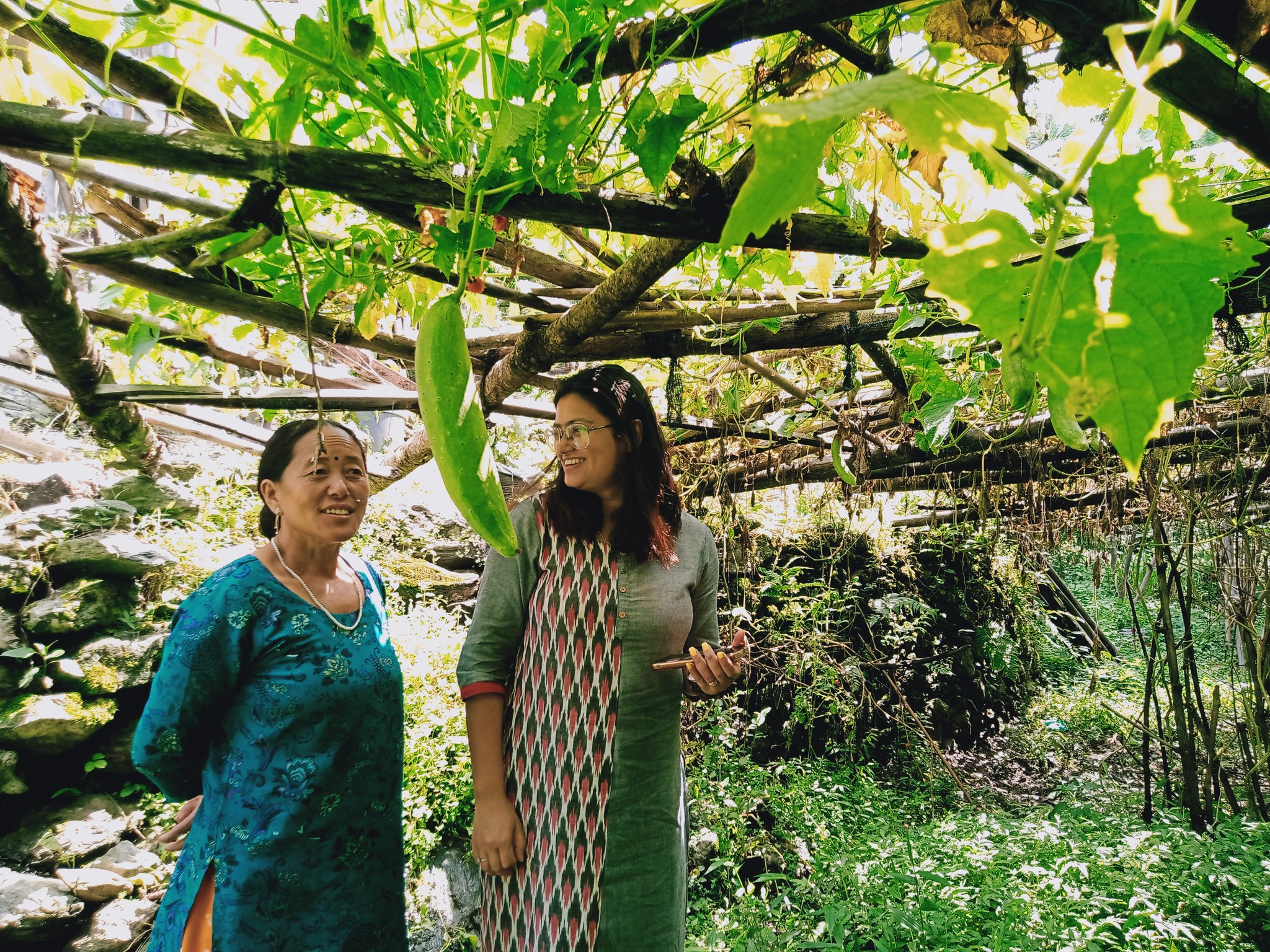
The Challange
Sikkim became India’s first fully organic state, a milestone celebrated worldwide.
But for smallholder farmers, the transition brought confusion, falling incomes, and wasted harvests, without the support to match the ambition.
How might we reimagine trust, tools, and timelines for farmers working within ritual planting calendars, navigating fragmented government schemes, and facing post-harvest loss?
Marginal farmers in Sikkim were caught in a perfect storm:
Official crop calendars overlooked traditional lunar planting cycles.
Perishable harvests spoiled without reliable cold storage.
Organic produce struggled to earn buyer trust without proof of origin.
Younger generations saw farming as outdated and unviable.
The result? Unstable incomes, erosion of cultural pride, and systems that farmers didn’t feel ownership over.
Listening Between the Lines
Four systemic gaps shaped the problem:
Calendars out of sync – Official schedules clashed with cultural timing.
Invisible produce – Buyers couldn’t verify origin or quality.
Wasted harvests – No functioning cold storage to prevent spoilage.
Youth disconnect – Farming offered little pride or future income.
The Approach
Research Approach
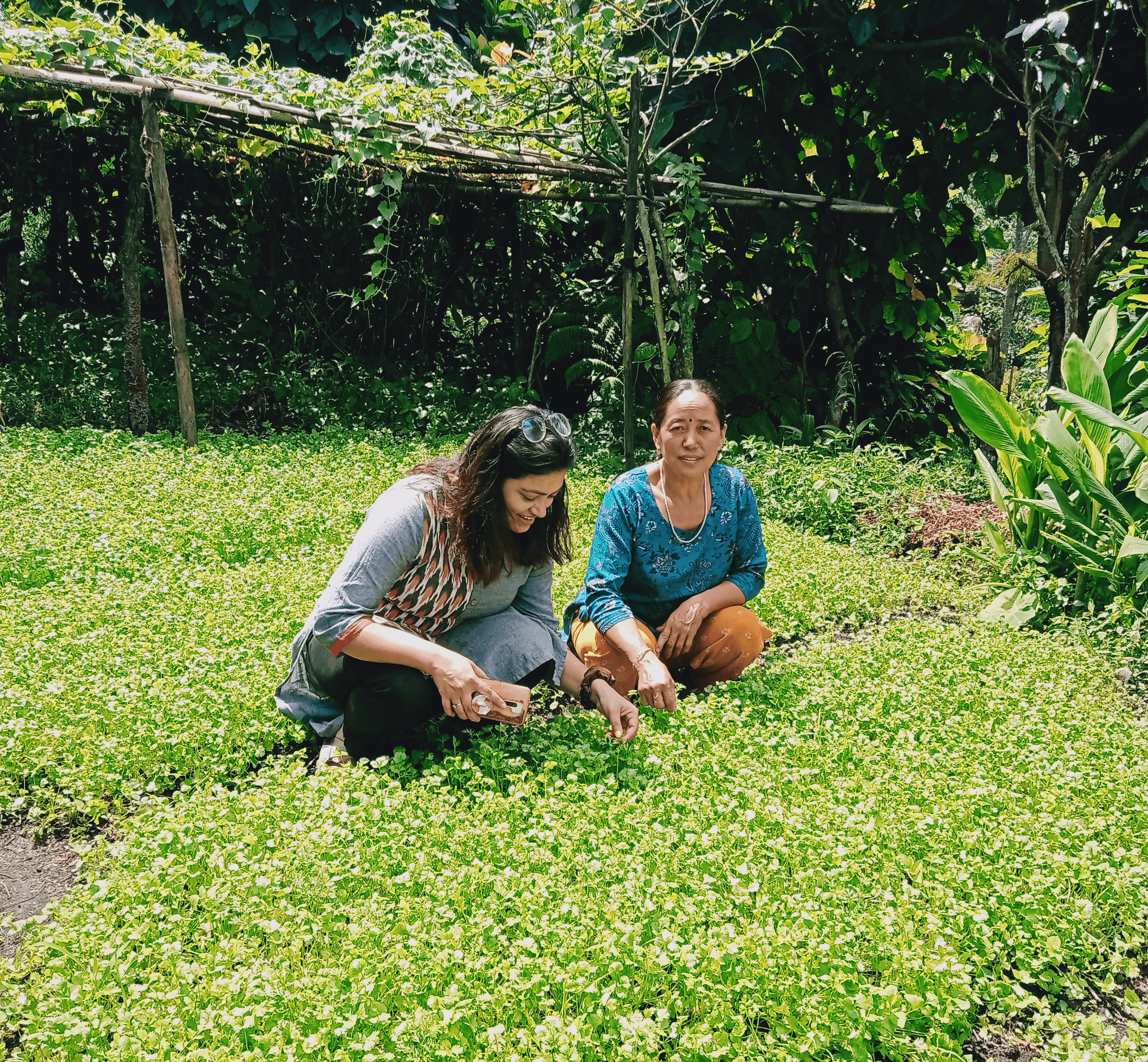
Over two years in Sikkim, I,
Lived with 250+ farmers across planting and harvest seasons, joining daily fieldwork and rituals.
Mapped trust breakdowns and barriers to adopting post-policy changes.
Co-designed tools with self-help groups (SHGs), youth, and frontline officers.
Developed seasonal UX assets aligned with cultural practices.
Built service maps and personas to visualize points of policy friction.
Methods included:
Immersive ethnography: Living alongside farming families, observing and participating in planting rituals.
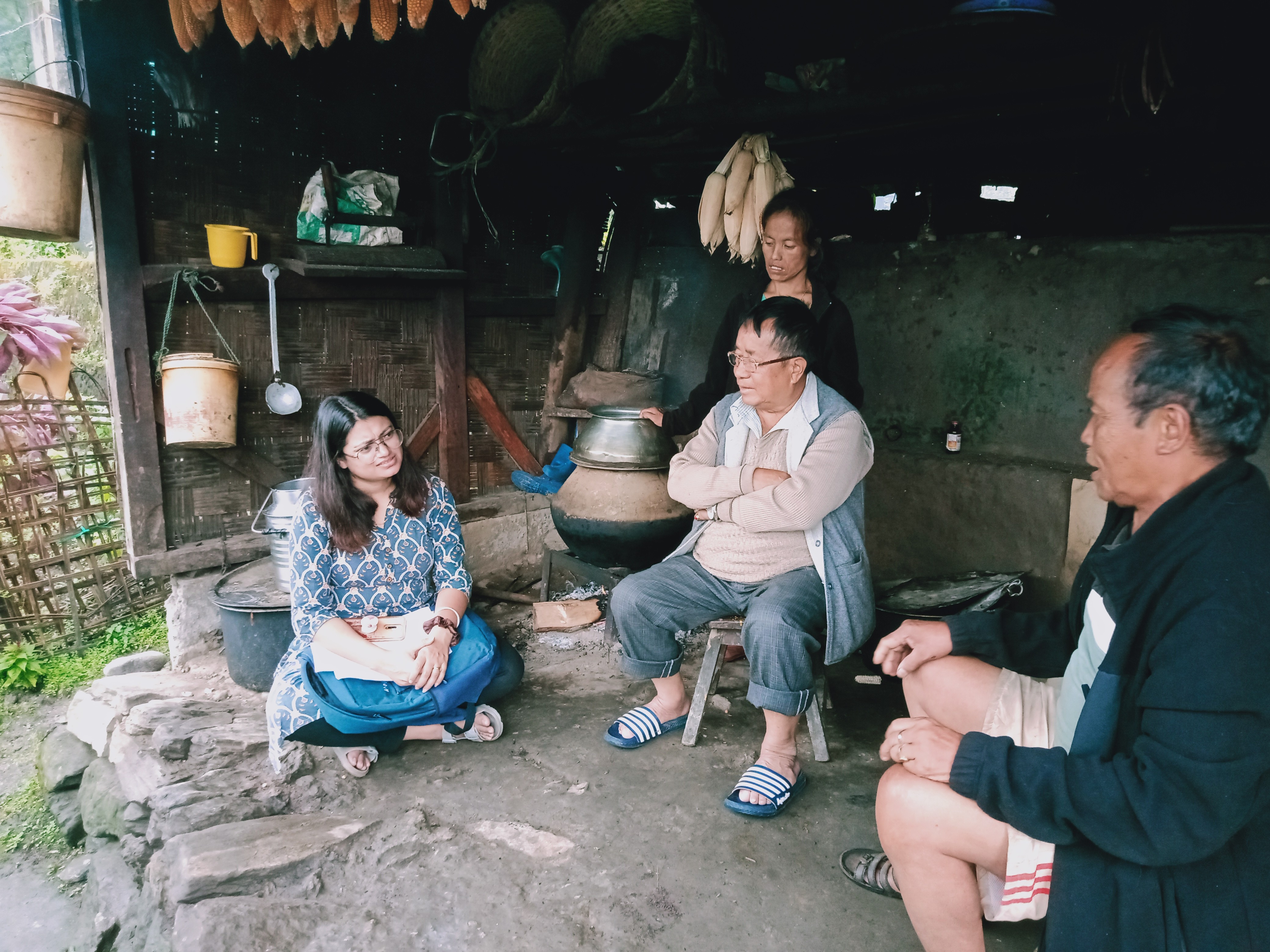
Interviews & shadowing: Speaking with farmers, traders, youth, and local officials to capture diverse perspectives.
System mapping: Following produce from field to market to identify systemic pain points.
Participatory co-design: Facilitating workshops to create solutions rooted in local priorities.
Outcome
I co-created five inclusive, ritual-aligned tools grounded in real farm life:
Festival-synced crop calendars blending lunar, seasonal, and climate data → +60% clarity in planning and scheme access
Multilingual offline farmer dashboards for scheme navigation in local languages
QR-labeled produce storytelling showing farmer identity and origin → 3× higher market value
SHG-run compost + solar cold storage hubs → 75% spoilage reduction
Youth-designed trailbooks mapping agro-tourism routes to revive farming identity and pride
These tools were piloted in five villages.
Within a year, three were adopted into government pilot programs and are now self-sustained by local groups, creating both cultural and economic resilience.
Why It Matters
This project showed how UX can bridge ancestral knowledge and institutional systems.
By living within farmers’ rhythms, I designed tools that worked offline, emotionally, and ecologically — not just digitally.
Why It Matters for Design
Human-centered systems last longer when they respect both market logic and cultural logic.
This work demonstrates my ability to:
Conduct deep, long-term ethnographic research in rural contexts
Translate cultural insights into actionable, testable designs
Facilitate genuine co-ownership of solutions with marginalized users